5% Tax-Free: Is This an Opportunity for Municipal Bond Investors?
For investors who depend on their portfolios for income, the recent bond-market sell-off may create a feeling of uncertainty.
Or… it can be viewed as an opportunity.
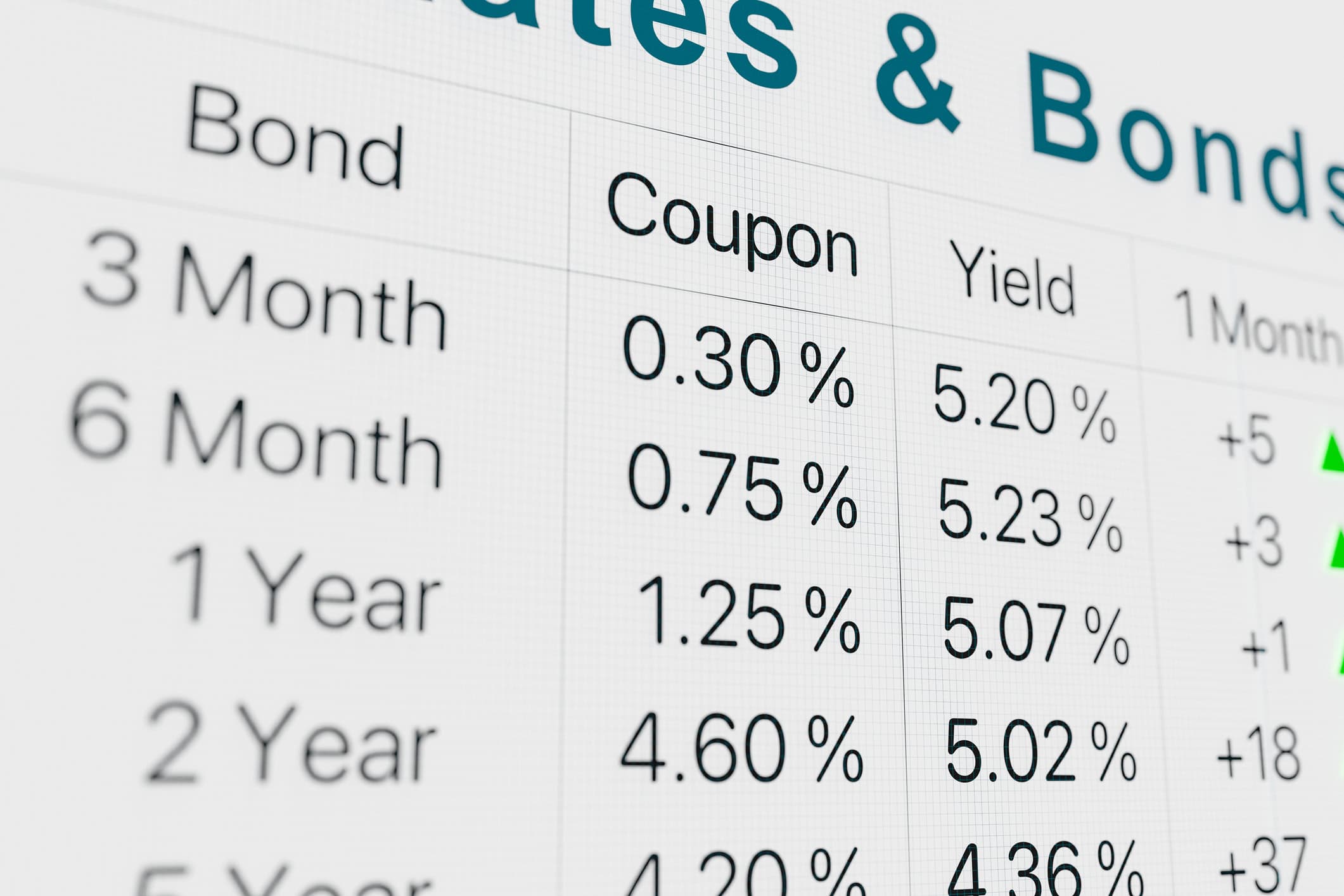
The selloff has pushed yields on high-grade municipal bonds to levels we haven’t seen very often in recent years. As of mid-September, the S&P Municipal Bond 20 Year High Grade Rate Index was around 5%.
So, the question becomes: Is a 5% tax-free municipal bond yield an opportunity to invest or feel concerned?
Why are municipal bond yields this high?
The answer: it has more to do with what is happening throughout the global bond market than municipal credit risk. That is a good thing for individual investors
Long-term Treasury yields have moved higher, and municipal bonds have generally followed. Investors are demanding more yield because of concerns about inflation, energy prices, government borrowing, and the direction of interest rates.
Citing persistent inflation concerns, the Federal Reserve raised its benchmark interest rate by another quarter percentage point on September 16, 2026. The Fed has also indicated that additional tightening could be necessary.
Higher oil prices associated with the conflict involving Iran have added another layer of uncertainty because energy-price increases can feed into inflation.
All of that has contributed to a broader repricing of bonds. There is an important distinction investor should understand: A decline in the price of a municipal bond does not necessarily mean the financial condition of the municipality has deteriorated.
Most often, the price is simply responding to changes in interest rates and investor demand.
Think like a bond investor—not a stock investor
This is where municipal bonds can be helpful for investors seeking or needing fixed income.
Suppose you own an individual municipal bond that pays a fixed interest rate and matures in 20 or 30 years. If interest rates subsequently rise, the market value of your bond will generally decline.
That can be unsettling. But ask yourself why you bought the bond in the first place.
If your objective was to generate a predictable income and hold the bond until maturity, the market price may not be the most important number.
The coupon doesn’t change, but the market price may change.
And if you are buying investment grade quality bonds history tells us those bonds return the principal at maturity. *
That’s very different from owning a stock where there is no specified maturity value.
It’s also different from owning a bond mutual fund or ETF where you own shares of a portfolio rather than a specific bond with a specific maturity date. Mutual funds and ETFs have no maturity
The opportunity created by uncertainty and short-term volatility
This is where today’s market becomes interesting for long-term income investors.
When yields rise, bond prices fall. That sounds negative. But for someone who is looking to buy bonds, falling prices can create something very different: higher available income. And for investors already invested in municipal bonds, their intended annual income is unaffected.
So, if you’re an investor seeking predictable income, a market that offers yields approaching 5% tax-free deserves attention. Historically, periods when municipal yields have reached approximately 5% area have been relatively unusual. That’s one reason long-term municipal investors tend to pay close attention when yields reach these levels.
The important point isn’t trying to predict exactly where interest rates will go next. Nobody knows.
The important question is whether today’s yield provides enough income to make owning the bond attractive for your investment objectives.
What does 5% tax-free really mean?
A 5% tax-exempt municipal bond yield isn’t necessarily equivalent to a 5% taxable investment.
For an investor subject to significant federal and state income taxes, the taxable-equivalent yield can be substantially higher.
For example, a New York City resident in the top combined Federal, City, and State tax bracket of approximately 51%, buying New York 5% tax-free municipal bonds would be the equivalent of earning approximately 10% from a comparable taxable investment.
The exact number depends on your tax bracket, state of residence, and the tax treatment of the bond. That’s why municipal bonds can be very attractive for investors who are looking for after-tax income rather than simply the highest headline yield.
But there is an important “quality” issue
A higher yield doesn’t eliminate credit risk. This is where investors need to be selective. This is where an experienced fixed income financial professional can help.
The opportunity created by today’s market is most compelling when you’re talking about high-grade municipal bonds whose higher yields are primarily the result of changes in interest rates and market conditions, not because investors are becoming increasingly concerned about the issuer’s ability to pay. Municipal credit fundamentals remain an important part of the story.
For example, recent analysis of state finances has pointed to generally constructive revenue trends and credit conditions in several major states.
That doesn’t mean every municipality is financially strong. It doesn’t. Municipal bonds still require credit analysis, diversification, and careful security selection. But it does mean investors should distinguish between two very different situations:
“The bond is cheaper because interest rates have risen.” Versus “The bond is cheaper because the issuer’s financial condition is deteriorating.”
Those are not the same thing.
What if you already own municipal bonds?
This is perhaps the most important message for existing bond investors.
If you bought an individual municipal bond for income and safety and you intend to hold it to maturity, don’t automatically assume that a lower market value means something has gone wrong with your investment.
Your statement reflects what the market might pay for the bond today. Remember, individual bonds are different from stock market investments.
If your goal is collecting the scheduled interest payments and ultimately receiving the principal at maturity, you are still achieving that goal as long as the bond’s credit remains sound and you don’t need to sell it. Short-term market-price fluctuations may have relatively little practical impact on your investment objective.
In fact, there is an interesting twist: The same market decline that makes an existing bond look less valuable can create a better opportunity for individual investors to invest now.
Volatility isn’t always the enemy
Many investors tend to think of volatility as something investors should fear.
For a long-term income investor, that’s not necessarily true. If you’re investing for income rather than constantly timing the market and trading your portfolio, volatility can sometimes work in your favor.
Higher interest rates can mean higher yields. Higher yields can mean more income from newly invested money. And for investors in higher tax brackets, tax-exempt income can become particularly valuable.
That’s why today’s municipal market deserves a closer look.
The bottom line
The current bond-market environment is creating something municipal investors haven’t seen very often: high-quality tax-exempt bonds with yields approaching 5%.
That doesn’t mean every municipal bond is a bargain. It doesn’t mean interest rates can’t rise further. And it certainly doesn’t mean investors should ignore credit quality.
But if your investment objective is long-term, tax-free income, today’s volatility may represent something very different from what it looks like on the surface.
It may represent an opportunity to lock in attractive tax-free income. For investors who already own individual municipal bonds, the lesson is equally important:
Don’t confuse a change in market value with a change in the income your bond was purchased to provide.
For investors who have been waiting to put money to work, the question may be less about whether today’s bond market feels uncertain—and more about whether today’s yields are attractive enough for your long-term income needs.
After all, in the municipal bond market, sometimes the headline that says, “prices are falling” is also the headline that says, “yields are getting interesting.”
*Moody’s research shows rated investment-grade municipal bonds had an average cumulative 10-year default rate of just 0.09% between 1970 and 2024
All investments involve risk, including loss of principal. Past performance does not guarantee future returns. The interest on municipal bonds, unless identified as “taxable” or “AMT” (alternative minimum tax), is exempt from federal income tax, but may be subject to state income tax for residents of certain states. For bonds identified as “taxable,” the income may be subject to federal and state income tax. For bonds designated “AMT,” taxes may exist for certain investors. For bonds purchased at a market discount or bonds identified as “OID” (original issue discount) the difference between the purchase price and par value may be treated as taxable interest rather than capital gain.
Hennion & Walsh, Inc Member SIPC/FINRA