A Guide to Municipal Bond Ladders for Income-Focused Investors
Stable income in fixed income rarely comes from finding one perfect bond. It usually comes from arranging many ordinary bonds so that cash arrives on a schedule you can actually use.
A municipal bond ladder is one of the clearest ways to do that. For investors in taxable accounts, it combines two appealing traits: staggered principal repayments and interest that is generally exempt from federal income tax, and sometimes state income tax as well. That mix can support retirement withdrawals, planned spending, or a more stable cash reserve inside a larger portfolio.
What a municipal bond ladder actually does
A municipal bond ladder is a portfolio of individual municipal bonds with different maturity dates spread across a chosen time frame. Instead of buying one large bond that matures in ten years, an investor buys a series of bonds maturing in year one, year two, year three, and so on.
That staggered structure is the whole point.
Each bond pays coupon interest while it is outstanding. When one rung matures, principal comes back and can either be spent or reinvested into a new bond at the far end of the ladder. The result is a rhythm of cash flow rather than a single large maturity event.
Picture a five-year ladder funded with $500,000. A simple design might place about $100,000 into bonds maturing in each of the next five years. Every year, one bond matures and returns principal, while the rest continue paying tax-advantaged coupon income. That helps smooth cash flow and reduces the risk of having to reinvest the entire portfolio when rates happen to be unattractive.
Why this structure can support stable income
The main strength of a ladder is not that it eliminates risk. It is that it spreads risk into smaller, more manageable pieces.
Interest-rate risk becomes easier to live with because only part of the portfolio matures at any one time. If rates rise, maturing principal can be reinvested at better yields. If rates fall, longer rungs purchased earlier continue paying their existing coupons. That creates a built-in balance between reinvestment opportunity and income continuity.
Municipal bonds add a second layer of appeal. Their interest is usually exempt from federal income tax, which can make their after-tax income surprisingly competitive against taxable bonds. In higher tax brackets, that difference matters a great deal. A lower nominal municipal yield can still produce stronger spendable income after taxes.
Stable income, then, comes from three sources working together: coupon payments, scheduled maturities, and tax efficiency.
Start with cash-flow design, not bond shopping
A strong ladder begins with your cash needs, not a screen full of bond listings. Before choosing issuers, coupons, or maturities, define what the ladder is meant to do.
Is the goal to fund annual living expenses for the next decade? Is it to cover tuition payments at known dates? Is it to hold a conservative pool of capital that throws off dependable tax-exempt income while preserving flexibility? Those answers shape the ladder’s size, its length, and how much principal should mature in each period.
This step is where many investors go wrong. They start with yield, then try to force the portfolio to fit their spending plan. The better process works in reverse. Decide how much cash is needed, when it is needed, and whether principal should be preserved or gradually spent down.
Useful planning questions include:
- annual after-tax income target
- planned investment horizon
- need for principal preservation
- tolerance for price volatility
- state tax considerations
- liquidity needs outside the ladder
If the objective is retirement spending, equal annual maturities often make sense. If the objective is flexibility, a shorter ladder with more near-term maturities may be more appropriate. The design should reflect the job the money needs to do.
Choosing the bonds for each rung
Once the cash-flow plan is clear, bond selection becomes much more disciplined. The goal is not simply to maximize yield. The goal is to populate each rung with bonds that fit the schedule while keeping risk at a level that supports dependable income.
Most ladder investors favor higher-quality municipal issuers because stability matters more than squeezing out the last bit of yield. Credit quality, call features, maturity dates, and tax treatment all deserve close attention. A bond that looks attractive on yield alone can disrupt a ladder if it is callable at the wrong time or if the credit profile is too weak.
Key selection filters usually include:
- Credit quality: Favor investment-grade municipal bonds, often in the AA to A range or stronger, when income stability is the priority.
- Maturity match: Buy bonds that mature when each rung is supposed to mature, rather than forcing a near miss into the portfolio.
- Call structure: Non-callable bonds give a cleaner cash-flow schedule; callable bonds may offer more yield but add reinvestment uncertainty.
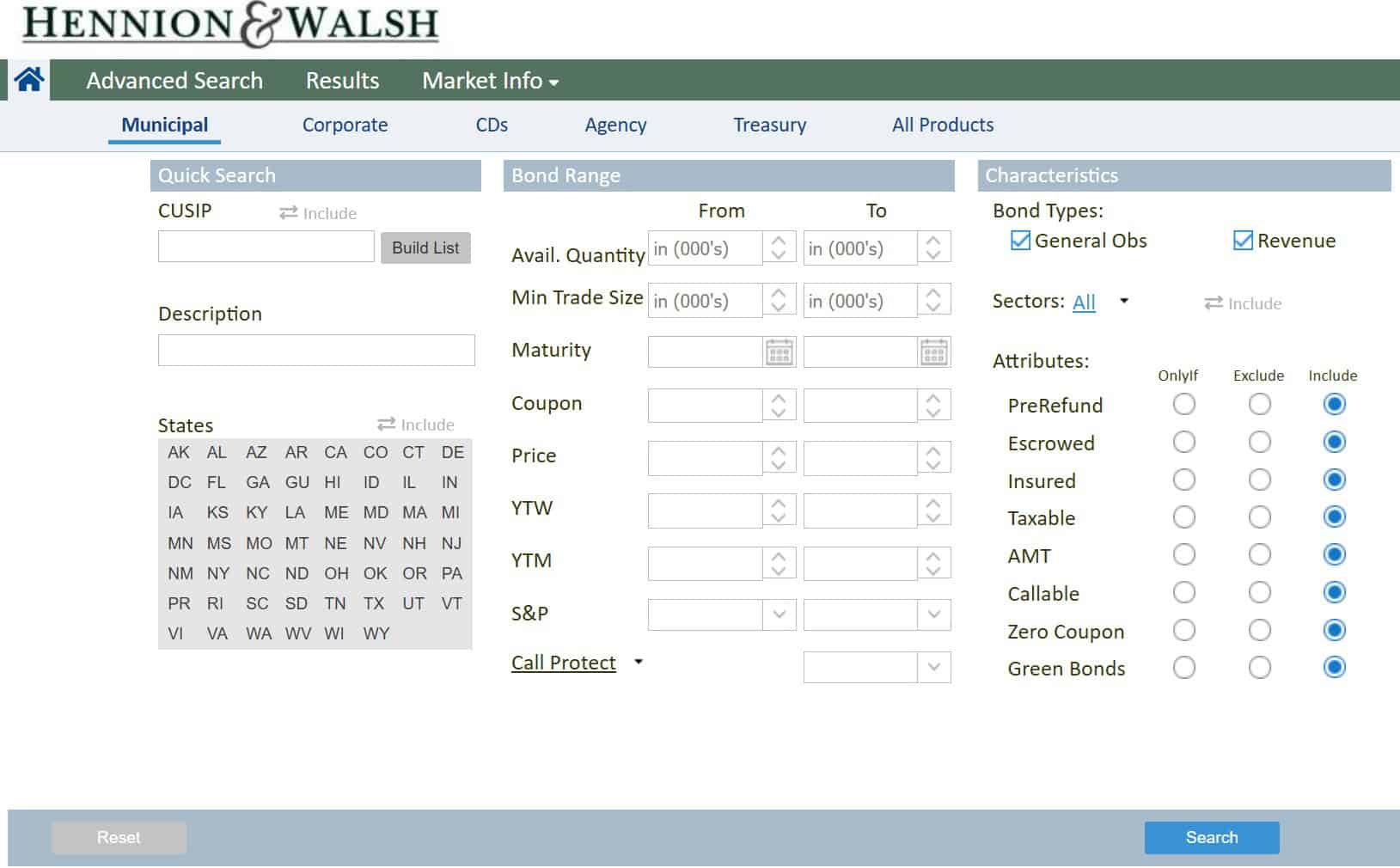
- Coupon and price: Look beyond coupon rate and check the bond’s dollar price, yield to maturity, and yield to call if applicable.
- Issuer mix: Spread holdings across multiple issuers and sectors, rather than clustering around one municipality, hospital system, or transportation authority.
- Tax fit: In-state bonds may improve after-tax income if state exemption applies.
Diversification matters here more than many investors expect. A ladder is already diversified by maturity, but it should also be diversified by issuer, sector, and often geography. Owning ten rungs from one issuer is not a ladder with ten risks reduced. It is one credit story repeated ten times.
How long should the ladder be?
There is no universal answer, though many individual investors use ladders in the five- to ten-year range. That span is often long enough to generate reasonable municipal yields while still creating regular access to principal.
A shorter ladder offers more liquidity and faster portfolio reset as rates change. A longer ladder can lock in income for more years, though it also carries greater sensitivity to rate movements and usually more exposure to call decisions if callable bonds are used.
Annual maturity intervals are the standard approach because they are easy to manage. Coupon payments already arrive semiannually, so most investors do not need bonds maturing every month to create regular cash flow. If monthly spending support is the goal, coupon income and a cash reserve can do much of that work without making the ladder overly complicated.
Equal rung sizes are also common, but they are not mandatory. A front-loaded ladder, with more money in earlier maturities, gives more near-term flexibility. A back-loaded ladder can raise income potential if longer maturities offer better value. The choice depends on whether your main priority is immediate liquidity, maximum after-tax income, or a balanced mix of both.
Building the ladder step by step
A professional process usually looks straightforward on paper, which is a good sign. Complexity is not the objective.
- Define the ladder’s role within the broader portfolio.
- Set the maturity schedule and target amount per rung.
- Screen bonds by credit quality, call features, and tax fit.
- Diversify issuers and sectors across the full ladder.
- Purchase with a hold-to-maturity mindset unless credit conditions change materially.
That last point matters. A ladder works best when it is built to be lived with, not constantly traded. Municipal bonds can be less liquid than many investors expect, and bid-ask spreads in the secondary market are not always friendly. If the plan depends on frequent selling, it is probably not a ladder. It is a trading account wearing a ladder’s clothing.
A disciplined purchase process also includes checking yield to worst, not just stated coupon or yield to maturity. For callable bonds, yield to call may be the more realistic number. Ignoring that can make expected income look better on paper than it will be in practice.
Common mistakes that weaken income stability
The most frequent mistake is reaching for yield. A ladder is designed to create reliable income, so lower-quality credits can defeat the entire purpose. One default, restructuring, or serious downgrade can damage both income and principal value.
Another problem is loading the ladder with callable bonds purchased at premiums without fully examining call dates. In a declining-rate market, those bonds may be redeemed earlier than expected. The investor gets principal back, but now must reinvest at lower yields. That can create exactly the income shortfall the ladder was supposed to reduce.
A few trouble spots are easy to watch for:
- concentration in one issuer
- too many premium callable bonds
- mismatched maturity dates
- weak attention to state tax rules
- no cash reserve for surprises
Liquidity also deserves respect. Municipal bonds are often best treated as hold-to-maturity instruments. If a portfolio may need large unplanned withdrawals, it helps to keep some cash or short-duration reserves outside the ladder. That way, the ladder can keep doing its job without forced sales.
Managing the ladder after purchase
A ladder is not a buy-and-forget structure, but it also does not require constant intervention. The best ongoing management is steady, selective, and boring in the best possible way.
Review credit quality periodically. Read for material rating changes, fiscal stress, or changes in revenue sources for key issuers. A ladder built on sound credits can usually be maintained with modest oversight, though ignoring credit deterioration simply because a bond is “for income” is not a sound habit.
When a bond matures, make a deliberate decision. If the original goal still stands, reinvest at the far end of the ladder to keep the structure intact. If spending needs have changed, the maturity proceeds can be redirected without disturbing the rest of the portfolio. That optionality is one of the ladder’s quiet strengths.
Coupon income also deserves a plan. It can be spent, swept to cash, or reinvested. What matters is consistency. If coupons are meant to support living expenses, treat them as part of the income budget. If they are meant to compound, reinvest with intention rather than letting cash build accidentally.
Rate changes will always invite second-guessing. A ladder helps because it turns one large timing decision into many smaller ones. Instead of trying to predict the perfect moment to buy bonds, the investor keeps capital moving through a scheduled process. That is a practical advantage, and over time it can be a calming one as well.
For bond investors who want tax-aware income with a clear structure, a municipal bond ladder remains one of the most useful tools available. When built around cash needs, credit discipline, and realistic reinvestment assumptions, it can turn a fixed-income allocation into something much more valuable: a dependable source of cash flow that stays organized even when markets do not.
Disclosures:
This commentary is not a recommendation to buy or sell a specific security. The content is not intended to be legal, tax or financial advice. Please consult a legal, tax or financial professional for information specific to your individual situation. Investing involves risk, including possible loss of principal. Past performance is no guarantee of future results. Diversification does not guarantee a profit or protect against loss. The interest on municipal bonds, unless identified as “taxable” or “AMT” (alternative minimum tax), is exempt from federal income tax, but may be subject to local or state income tax for residents of certain states.