Understanding Premium vs Discount Municipal Bonds: A Guide for Investors
Municipal bonds can feel straightforward until you notice that two bonds with the same maturity date might have very different prices. One trades at 108 and the other at 92, even though both are issued by public entities and both may offer federally tax-exempt interest. That price difference is not noise. It reflects the bond’s coupon rate, today’s interest rates, call features, and the market’s view of risk and liquidity.
Learning to read “premium” and “discount” bonds with clear eyes helps you avoid common mistakes, like chasing the highest coupon or assuming a lower price automatically means a bargain. It also helps you build a municipal allocation that behaves the way you expect when rates move.
Par, price, and the two ways a bond can be “different”
Most municipal bonds are issued with a par value of $1,000 (quoted as 100). If a bond trades above 100, it trades at a premium. If it trades below 100, it trades at a discount.
The key idea is that price is not a scorecard for “good” or “bad.” Price is the mechanism that makes a bond’s overall return competitive with other available bonds after considering its coupon, maturity, and embedded options.
Also, remember the difference between:
- Clean price: the quoted price (premium or discount relative to par)
- Dirty price: clean price plus accrued interest since the last coupon date
The premium or discount is about the clean price. Your settlement cost will also include accrued interest.
Why municipal bonds trade above or below par
A municipal bond’s price adjusts so that its yield matches what the market demands for that bond’s risks and features. When the bond’s coupon is higher than what investors currently require, buyers will pay extra for that richer cash flow stream. When the coupon is lower than what investors require, the price must fall to compensate.
After that baseline, other forces can push the price around as well.
Common drivers include:
- Interest rates: when market yields rise, existing bonds fall in price; when yields fall, existing bonds rise.
- Coupon vs. market yield: higher coupons tend to trade at premiums; lower coupons tend to trade at discounts.
- Call structure: bonds callable at 100 often see price “capped” near the call price when rates fall.
- Credit and fundamentals: improving credit perception can lift prices; credit concerns can pressure them.
- Supply and demand technicals
- Liquidity and lot size effects
That last point matters more than many investors expect. A smaller, odd-lot position can trade at a slightly different level than an institutional-size block, even for the same CUSIP.
Yield math that matters: coupon, current yield, yield to maturity, yield to call
Municipal bonds come with multiple yield measures, and premium vs discount bonds can look very different depending on which yield you focus on.
- Coupon rate: the stated interest rate applied to par
- Current yield: annual coupon divided by today’s price
- Yield to maturity (YTM): the annualized total return if held to maturity, assuming reinvestment at that yield
- Yield to call (YTC): the annualized return if the bond is called on the first call date at the call price (often 100)
A premium bond often shows a high coupon and a decent current yield, yet a lower YTM than you might guess because part of your return is “giving back” the premium as the bond pulls to par at maturity or call. A discount bond is the reverse: lower coupon income, with more of your return arriving through price accretion toward par.
One sentence that keeps investors grounded: When a bond is callable, the yield that matters most is often the yield to the worst possible outcome for you, not the best.
As a simple illustration, imagine two similar-quality bonds with similar maturities:
- Bond A: 5% coupon, priced at 110 (premium)
- Bond B: 3% coupon, priced at 95 (discount)
Bond A pays more cash interest, but you paid extra upfront. Bond B pays less interest, but you may earn some return as the price moves toward par, assuming credit stays stable.
Premium municipal bonds: what you are really buying
A premium municipal bond typically has a higher coupon than the market needs. Investors pay up to receive that higher periodic income. In a portfolio, that can feel comforting because more of the return arrives as cash flow rather than relying on price appreciation.
Premium bonds also tend to have shorter effective duration when rates fall, because many premium munis are callable at par. If rates decline, the issuer has an incentive to refinance, and the bond’s price often stops rising well above the call price. That call “ceiling” can reduce upside, yet it can also limit how much you pay for a given amount of yield.
Premium-bond tradeoffs are real:
- Higher coupon cash flow can support spending needs.
- Call risk rises, especially when the bond is priced well above the call price.
- Total return can be constrained if the bond is called sooner than you hoped.
Tax treatment matters too. For tax-exempt municipal bonds, premium amortization is generally required and reduces your bond’s tax basis over time. The mechanics are worth reviewing with a tax professional, but the practical takeaway is that the premium does not disappear. It shows up through amortization and basis adjustments, and it changes how you should interpret “income” on a tax-exempt holding.
Discount municipal bonds: the appeal and the fine print
Discount municipal bonds often exist because their coupons are lower than current market yields, or because the market is demanding extra yield for perceived risk, liquidity, or structure. A discount can be perfectly ordinary, especially after rate increases.
The appeal is straightforward: you may get more yield per dollar invested, and you may benefit if the bond’s price accretes toward par as it approaches maturity, assuming no deterioration in credit.
Still, discount bonds can carry a different experience in a portfolio:
- Lower cash coupon means less spendable income today.
- Price sensitivity can be higher, especially for long maturities with low coupons.
- If the discount reflects credit stress rather than rates, the outcome depends heavily on credit trajectory.
Taxes are also a common tripwire. Discounts can come from original issue discount (OID) or market discount, and they are treated differently. With municipals, parts of the discount may be taxable even if the coupon interest is federally tax-exempt, depending on how the discount arose and how large it is.
Taxes: where many comparisons go wrong
Investors often compare premium and discount munis using headline coupon and a single yield number, while missing how taxes and amortization change the lived experience.
A few themes are worth keeping front and center:
- Tax-exempt coupon interest is often the main attraction, but it is not the whole return.
- Premium amortization on tax-exempt munis reduces basis and affects reported tax-exempt interest treatment.
- A discount can create taxable income in some cases, even when the bond is otherwise tax-exempt.
The “de minimis” rule is one concept that can change the picture. If a municipal bond’s market discount is small enough, it may be treated more like a capital gain than ordinary income. The cutoff depends on time to maturity and the size of the discount, so it is not something to guess at from a quote screen.
If you hold muni bond funds or ETFs, premium and discount dynamics still apply, but you experience them through distributions, NAV movements, and the fund’s own tax reporting rather than through individual bond accretion and amortization schedules.
A practical side-by-side comparison
The table below frames premium vs discount munis in portfolio terms. It is intentionally generalized because specific CUSIPs can break the pattern based on call features, coupons, and credit.
| Dimension | Premium municipal bonds | Discount municipal bonds |
| Typical coupon | Higher | Lower |
| Price behavior toward maturity | Pulls down toward par (or call price) | Pulls up toward par (if credit stable) |
| Cash flow profile | More income now | Less income now, more return via price accretion |
| Call exposure | Often higher, price can be capped near call | Can be lower, though discounts can also be callable |
| Rate sensitivity (all else equal) | Often lower when priced to a near call | Can be higher for low-coupon, long-maturity bonds |
| Common investor fit | Income-focused, reinvestment planning | Total return focus, patience for lower coupons |
| Tax wrinkles | Premium amortization affects basis and reporting | Market discount and OID rules can affect taxability |
Use this as a starting point, then confirm with the bond’s yield-to-call and yield-to-maturity, not just its coupon.
Choosing what fits: matching bond type to portfolio goals
The right choice is often less about “premium is better” or “discount is better” and more about matching cash flow, volatility tolerance, and reinvestment expectations to your plan.
If you are building around predictable tax-exempt cash flow, premium bonds may feel more intuitive. If you are trying to maximize yield per dollar invested and can tolerate lower coupon income, discounts may be attractive, especially after periods when rates have moved higher.
A few portfolio-oriented guidelines can help:
- Higher spending needs today
- Lower reliance on selling bonds to fund withdrawals
- Call-aware income: premium bonds can support income goals, but plan around the possibility of being called.
- Total return discipline: discount bonds can reward patience, yet they can test resolve during rate volatility.
- Barbell and ladder strategies can use both
Many seasoned muni portfolios mix premium and discount holdings on purpose, using premiums to support cash flow and discounts to improve yield or diversify structure.
What to look at before you buy (and what to ask your broker or advisor)
Premium vs discount is the beginning of the analysis, not the end. The next step is to translate the bond’s structure into a realistic range of outcomes, especially when calls are involved.
Bring these questions to any trade ticket review:
- Yield to worst: what is the yield assuming the bond is called at the first practical date?
- Call schedule: when can it be called, at what prices, and how does the price compare to the call price today?
- Tax characterization: is any portion of the discount treated as market discount or OID, and how will it be reported?
- Credit trajectory: what would need to go right, and what could go wrong, for this issuer over your holding period?
- Minimum denomination and liquidity expectations
A premium bond that looks “safe” because it has a high coupon can still produce an unpleasant outcome if you pay a large premium and the bond is called quickly. A discount bond that looks “cheap” can still disappoint if the discount is signaling credit deterioration rather than rate normalization.
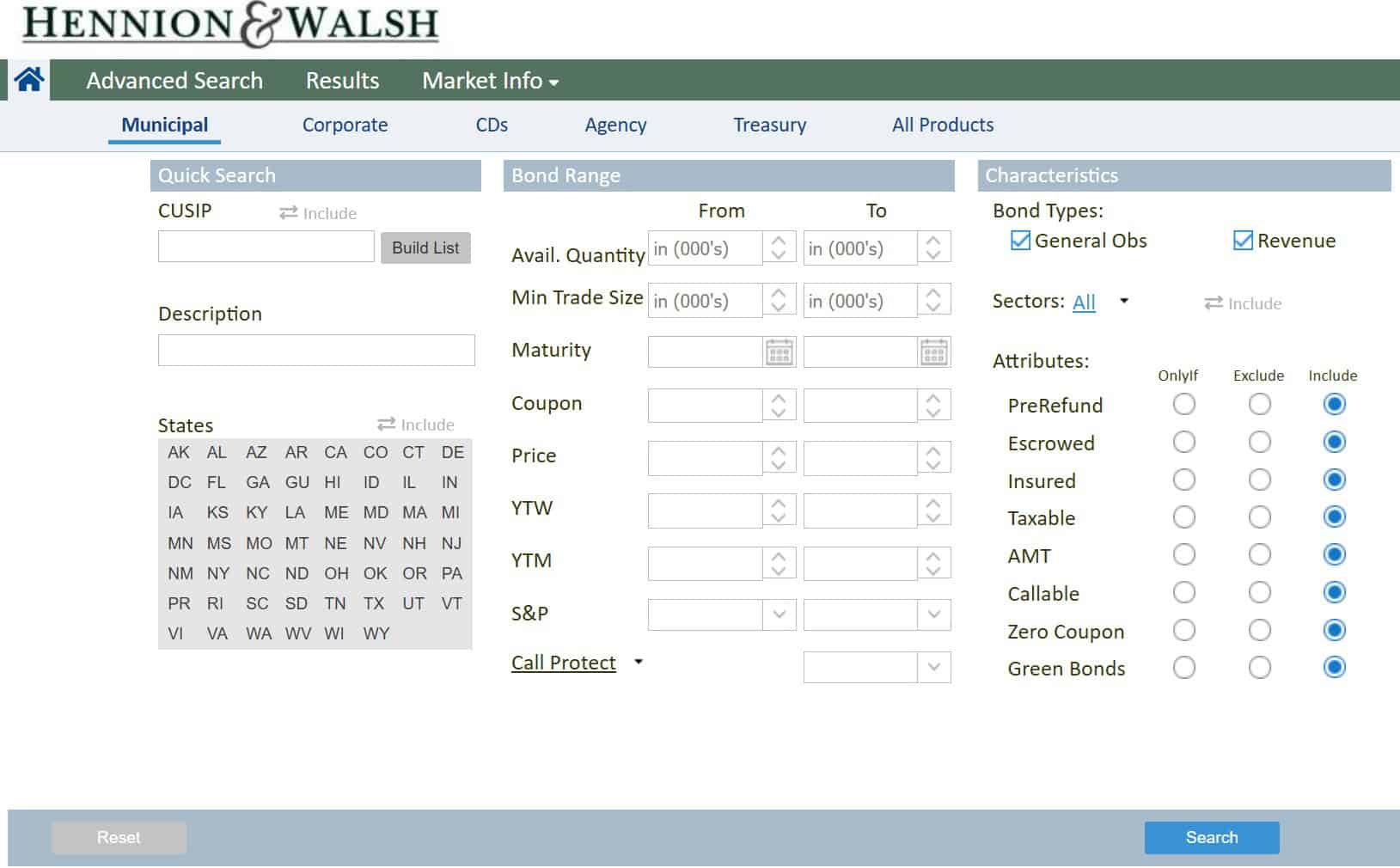
Reading a muni quote with premium/discount in mind
A clean workflow helps you avoid getting anchored on the dollar price.
Start by identifying whether the bond is callable and, if it is, treat the call date as a competing endpoint to maturity. Then compare YTM, YTC, and yield-to-worst, and ask which endpoint is more likely given today’s rate level and the coupon’s attractiveness to the issuer.
Next, map the bond to your portfolio role:
- Is it meant to be held to a known date?
- Is it there to generate dependable cash flow?
- Is it there to provide ballast when risk assets wobble?
Once the role is clear, premium vs discount becomes a tool, not a label. Premium pricing can be a rational way to buy income with lower rate sensitivity near a call. Discount pricing can be a rational way to buy yield with more of the return embedded in pull-to-par dynamics. When you connect those mechanics to your time horizon and tax situation, municipal bond pricing stops looking mysterious and starts looking like useful information.
Disclosures:
This commentary is not a recommendation to buy or sell a specific security. The content is not intended to be legal, tax or financial advice. Please consult a legal, tax or financial professional for information specific to your individual situation. Investing involves risk, including possible loss of principal. Past performance is no guarantee of future results. Diversification does not guarantee a profit or protect against loss. The interest on municipal bonds, unless identified as “taxable” or “AMT” (alternative minimum tax), is exempt from federal income tax, but may be subject to local or state income tax for residents of certain states.