Tax-Free Municipal Bonds in 2025: Why They May Be a Smart Choice
In 2025, tax-free municipal bonds continue to stand out as a compelling investment option. With attractive returns and significant tax advantages, they remain a powerful tool for enhancing portfolio performance. As economic conditions shift and the focus on wealth preservation grows, understanding the benefits of municipal bonds is more important than ever. This article explores the current municipal bond landscape—covering tax benefits, credit quality, market stability, diversification strategies, and future outlook. By the end, you’ll understand why tax-free municipal bonds could play a key role in your financial strategy this year.
The Current Landscape of Municipal Bonds
The municipal bond market is influenced by various factors affecting both yields and investor sentiment. Municipal bond yields are gradually recovering as interest rates stabilize and the economy adapts to recent monetary policy changes. This environment is particularly beneficial for investors seeking tax-free income, making municipal bonds an attractive choice.
Recent economic shifts, including changes in inflation rates and Federal Reserve policies, have significantly impacted bond performance. As inflation pressures ease, many investors are turning to the stability and safety of municipal bonds. These bonds often provide a reliable income stream exempt from federal taxes, enhancing their appeal during uncertain economic times.
Several factors are driving increased interest in municipal bonds today. The ongoing need for infrastructure development and public funding has led to a robust pipeline of new issuances, offering diverse investment opportunities. Additionally, the tax advantages associated with municipal bonds make them a compelling choice for high-income earners looking to preserve wealth while minimizing tax liabilities.
Tax Advantages of Municipal Bonds
Municipal bonds, commonly known as munis, are renowned for their tax-exempt status, making them an attractive option for maximizing after-tax returns. The primary advantage of these bonds is that the interest income they generate is typically exempt from federal income tax, and in some cases, state and local taxes as well. This tax exemption can significantly enhance the net yield, especially for individuals in higher tax brackets.
Comparing municipal bonds to other investments, such as corporate bonds or stocks, highlights their tax benefits. Corporate bonds may offer higher nominal interest rates, but their taxable income can erode actual returns when tax liabilities are considered. In contrast, municipal bonds provide a more reliable and tax-efficient income stream, making them a smart choice for those looking to preserve wealth and minimize tax burdens.
Potential changes in tax legislation could further influence the attractiveness of tax-free municipal bonds. While specific legislative outcomes are hard to predict, the current political climate suggests continued support for local governments through tax-exempt financing. This presents an opportunity for investors to capitalize on the stability and tax advantages that munis offer, reinforcing their position as a sound investment strategy in an evolving landscape.
Credit Quality and Market Stability
Understanding the credit quality and market stability of tax-free municipal bonds in 2025 is essential for making informed investment decisions. Agencies like Moody’s, S&P, and Fitch typically rate municipal bonds, assessing the creditworthiness of the issuing entities. Higher credit ratings indicate a lower risk of default, making these bonds a safer investment choice. In 2025, we anticipate continued robust credit quality, driven by improved fiscal policies and stronger revenue generation from local governments.
Historically, municipal bonds have demonstrated resilience during economic downturns. For instance, during the 2008 financial crisis, municipal bonds largely outperformed other fixed-income assets, showcasing their ability to maintain value even in turbulent times. This historical performance underscores their stability and reliability as a long-term investment.
Several factors contribute to the stable credit quality of municipal bonds in 2025. Enhanced transparency in financial reporting, stringent regulatory measures, and diversified revenue streams are vital elements that bolster investor confidence. Moreover, as municipalities focus on sustainable development and responsible fiscal management, the likelihood of maintaining strong credit ratings increases. With Hennion & Walsh’s guidance, investors can navigate the complexities of the municipal bond market and make strategic choices that align with their financial goals.
Diversification and Portfolio Strategies
Incorporating tax-free municipal bonds into your investment strategy can significantly enhance diversification. These bonds, issued by local and state governments, not only provide a steady income stream but also reduce overall portfolio volatility. By allocating a portion of your portfolio to municipal bonds, you can achieve a balance between risk and return, especially in unpredictable market conditions.
Municipal bond ETFs offer an attractive option for those seeking simplicity and efficiency. These exchange-traded funds allow investors to gain exposure to a diversified basket of municipal bonds without the need for extensive research or management. With the ability to trade like stocks, municipal bond ETFs provide liquidity and flexibility, making them an excellent choice for both new and seasoned investors.
Risk management is crucial in any investment strategy, and municipal bonds excel in this area. Historically, they have shown resilience during economic downturns, often maintaining their value while equities fluctuate. This stability is particularly appealing in an environment where economic uncertainties may arise. By incorporating tax-free municipal bonds into your portfolio, you not only enhance your income potential but also fortify your investment against market volatility, ensuring a well-rounded approach to your financial goals.
Future Outlook for Municipal Bonds
As we look ahead, the future of tax-free municipal bonds appears promising. Analysts suggest that interest rates may stabilize or even decline, which could enhance the attractiveness of municipal bonds. When interest rates fall, existing bonds with higher yields become more valuable, providing an opportunity for investors to lock in tax-free income while benefiting from capital appreciation.
Moreover, potential market shifts, including increasing infrastructure spending and a focus on sustainable projects, could create a fertile ground for municipal bonds. As state and local governments seek to fund essential services and projects, the demand for these bonds may rise, leading to favorable pricing and investment opportunities. Investors who stay informed about regional developments and fiscal health will be well-positioned to identify the best municipal bond offerings.
Investing in municipal bonds not only offers tax advantages but also presents long-term benefits that can enhance a diversified portfolio. These bonds generally provide a reliable source of income, especially for those in higher tax brackets, and can serve as a stabilizing force during market volatility. With our expertise at Hennion & Walsh, we are committed to guiding you through the intricacies of the municipal bond market to ensure you make informed decisions that align with your financial goals
How to Buy and Invest in Tax-Free Municipal Bonds
How can I buy tax-free bonds and what are the different options available
Investors can buy tax-free bonds, also known as municipal bonds, through several options:
- Individual Bonds: Offer predictable income and a known maturity date, giving investors control over their portfolio.
- Professionally Managed Municipal Bond Portfolios: Provide diversification and ongoing credit monitoring, with bonds selected to match your income goals and risk tolerance.
- Municipal Bond Mutual Funds and ETFs: Offer convenience, liquidity, and professional management, though they do not have a fixed maturity and can fluctuate in value.
The right approach depends on your tax bracket, income needs, time horizon, and preference for control versus simplicity.
How can I invest in tax-free municipal bonds
Investors can invest in tax-free municipal bonds by purchasing individual municipal bonds, working with a professional manager to build a customized municipal bond portfolio, or investing through municipal bond mutual funds or ETFs. Individual bonds offer predictable, tax-advantaged income and a defined maturity date, while managed portfolios provide diversification and ongoing credit monitoring. Mutual funds and ETFs offer ease of access and liquidity but do not have a fixed maturity and can fluctuate in value. The best approach depends on an investor’s tax situation, income goals, risk tolerance, and time horizon.
How to find the best tax-free bonds yield
Finding the best tax-free bond yields involves more than just looking at the interest rate. Key factors to consider include:
- Credit Quality: Higher-rated bonds are generally safer but may offer lower yields; lower-rated bonds can offer higher yields with more risk.
- Maturity: Longer-term bonds often provide higher yields but can be more sensitive to interest rate changes.
- Call Features: Some bonds can be called (redeemed early) by the issuer, which may affect income.
- Tax-Equivalent Yield: Compare yields on a tax-equivalent basis to understand the true after-tax return.
- State Issuance: Bonds issued by your home state may provide additional tax advantages.
Working with an experienced municipal bond specialist can help you evaluate these factors and identify opportunities that match your income goals, risk tolerance, and investment horizon.
What are the current tax-free municipal bond interest rates
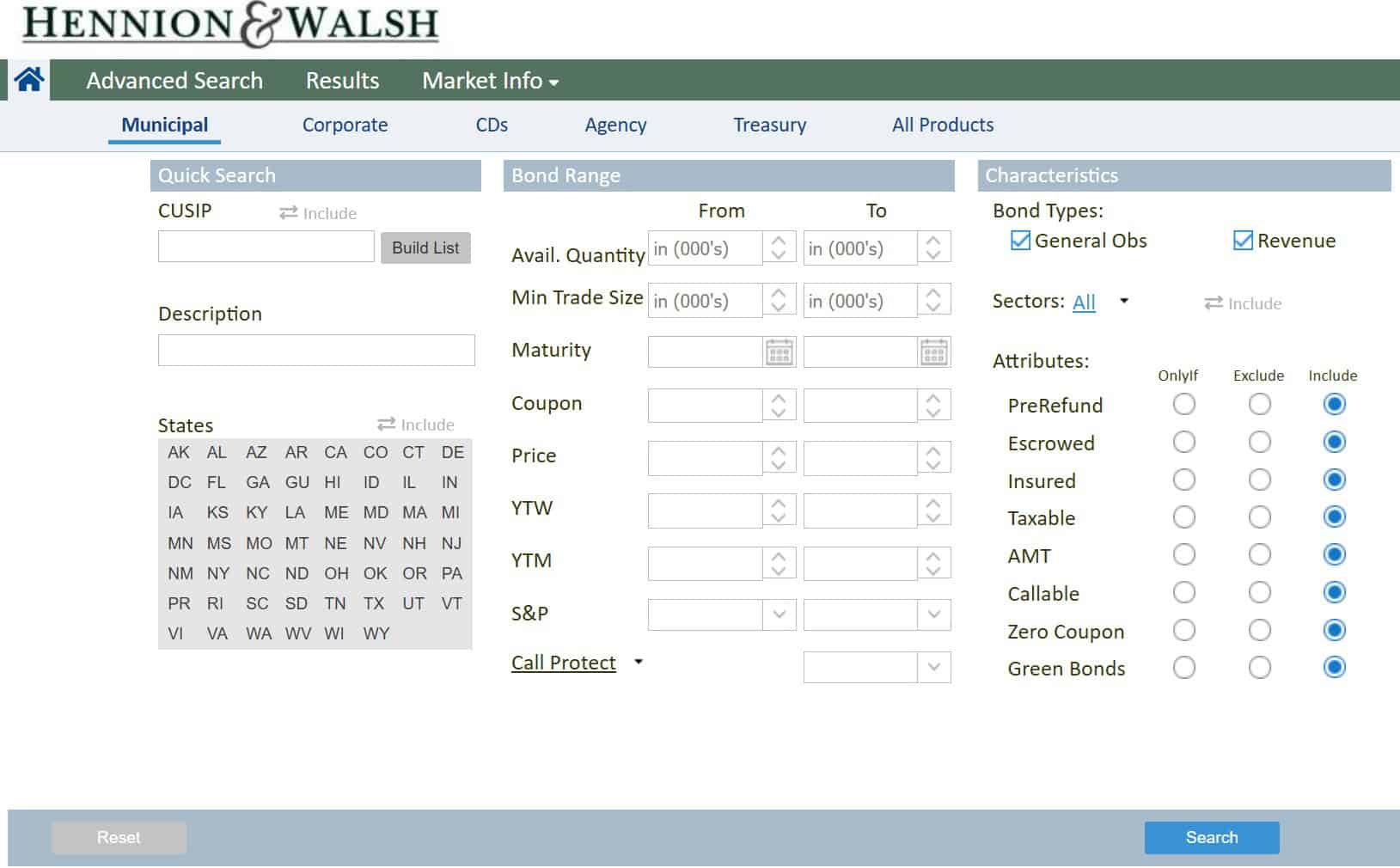
Tax-free municipal bond interest rates vary based on factors like maturity, credit quality, and market conditions. Rates change frequently, so the best way to see what’s available is to visit the Hennion & Walsh Bond Center. Our specialists can help you explore current opportunities and find tax-free bonds that match your income goals and risk tolerance.
What are the current yields on tax-free municipal bonds
Yields on tax-free municipal bonds fluctuate based on market conditions, bond maturity, and credit quality. To see the latest yields and explore options, visit the Hennion & Walsh Bond Center, where our specialists can help you find bonds that align with your income goals and risk tolerance.
Where can I find the current rates for tax-free bonds
Current rates for tax-free municipal bonds change frequently and depend on factors such as maturity and credit quality. The most up-to-date rates are available at the Hennion & Walsh Bond Center, where our team can guide you to the bonds that best meet your investment needs.
The Bottom Line
Looking at the municipal bond outlook, it is evident that tax-free municipal bonds in 2025: why they may be a smart choice is a crucial consideration for any investor. The rate of return on municipal bonds, combined with their tax benefits, makes them an attractive option. Are municipal bonds tax free? The answer is yes, and this tax exemption, coupled with a favorable municipal bond outlook, suggests that these bonds will continue to be a valuable addition to a diversified investment strategy in 2025 and beyond. They are federally tax-free, though state and local taxes may apply depending on where the bond is purchased.
This commentary is not a recommendation to buy or sell a specific security. The content is not intended to be legal, tax or financial advice. Please consult a legal, tax or financial professional for information specific to your individual situation. Investing involves risk including possible loss of principal. Past performance is no guarantee of future results. Diversification does not guarantee a profit or protect against loss.