Hennion & Walsh Blog
|
For the first quarter of 2013, defensive sectors were the front runners as Health Care, Consumer Staples and Utilities were top quarterly performers. This took many by surprise as one would tend to believe that more economically sensitive sectors (Ex. Cyclicals) would be out in front of a market that was accelerating higher at a considerable speed. Alexandra Scaggs recently wrote in a Wall Street Journal (WSJ) article entitled, “Stock Rally Strikes a Defensive Tone” that these three sectors are “…relatively insulated from the state of the economy; people will cut back on spending in tight times but not on medication, food or electric bills.” Perhaps this reveals the types of sectors that are positioned to perform better within a “plow-horse economy” or perhaps this is a result of the risk tolerance comfort level of many investors who re-entered the stock market during the first three months of the New Year. To this end, Scaggs wrote in the same WSJ article cited above that some investors seem to be, “…concerned about growth in the U.S. and abroad…searching for investments that will offer steady cash payouts as interest rates remain low.”
|
|
According to the Investment Company Institute (ICI), data on the market value of unit investment trusts (UITs) issued and outstanding as of year-end 2012 indicates a total of 5,787 trusts with a value of $71.73 billion.
|
|
Our thoughts and prayers at Hennion & Walsh are with all of individuals and families affected by the senseless tragedy that occurred at the Boston Marathon.
|
|
As I write this post on April 15, spot Gold prices, according to Bloomberg, settled down approximately 9% for the day (which marks the biggest one day decline since February of 1983) while spot Silver prices were down approximately 12% for the day. Other precious metals, and industrial metals for that matter, have not escaped the recent downward pressure on commodity prices as Platinum, Palladium, Aluminum and Copper also posted losses on April 15. It is worthwhile to note that other Energy and Agriculture commodities are also down for the day.
|
|
If you never heard of the small island country in Eastern Europe called Cyprus prior to the last few weeks, you are not alone. The Republic of Cyprus is a popular destination for tourists along the Mediterranean Sea. Cyprus joined the European Union (EU) and the Eurozone in 2004 and 2008 respectively. The majority of their economy, as measured by Gross Domestic Product (GDP) is derived from services from industries such as financial, real estate, and, of course, tourism.
|
|
While we are optimistic about the prospects for continued growth in the U.S. economy (albeit sub-standard growth from a historical perspective) and for the stock market overall for 2013, we remain concerned that many of the same headline risks that were in place heading out of 2012 may still prove to be headwinds in 2013.
|
|
Momentum continues to build in the housing market, domestically and internationally, and it appears that the real estate recovery is for real. On the domestic front, we have taken notice of a positive trend in pricing, volume, inventory and sentiment across the country. For these reasons, we contend that housing will remain as one of the brightest areas of the U.S. economy and will likely be an engine of future growth for the anemic state of the current U.S. economic recovery.
Published: January 25, 2013 | Author: Kevin Mahn |
Kevin Mahn, Economy, economic recovery, Hennion & Walsh
|
|
At Hennion & Walsh, we tend to view investments in gold not only as a potential inflation hedge (recognizing that shorter term inflation forecasts remain muted presently) but also as an equity market volatility hedge. The latter in a similar fashion to the way that investors traditionally have gravitated towards fixed income investments when equity markets are volatile, or depressed, these same investors now seem to be increasingly looking to precious metals (gold and silver included) to help not only from a diversification standpoint but also to assist with total return potential given the record low interest rate environment that fixed income investments find themselves within currently in the U.S..
|
|
A last minute fiscal cliff deal/compromise was reached in Washington to avert the initial stages of a potential economic meltdown which was received warmly by the markets given the extent of the relief rally that we have experienced thus far on the first trading day of the New Year. However, we, at Hennion & Walsh, do not believe that we are anywhere close to signaling “all clear” on the Fiscal Cliff front and that the deal in question, while it averted some of the feared, short-term draconian tax increases associated with going over the cliff, did nothing to address the longer term, more encompassing budget issues as the compromise delayed any decisions on spending cuts for another two months. The compromise also did not deal with the impending Debt Ceiling debate, which promises to have both political parties digging in on their ideological heels.
|
|
Just as much of the emphasis of the political discourse in Washington has been on the economy of late, a great deal of our investment decisions is influenced by our views on both the current state of the economy and our forecast for future economic growth. According to the Center on Budget and Policy Priorities, the U.S. economy has grown for twelve consecutive quarters, but the pace of the growth has been slow and below historical economic recovery averages. Evidence of this slow growth can be found in the paltry 1.3% revised Gross Domestic Product (GDP) annualized growth rate for the 2nd quarter of 2012.
|
|
It seems as though you can’t turn on a news channel these days and not hear some discussion about the impending Fiscal Cliff. These discussions generally involve some type of doomsday scenario where the economy, and stock markets, “fall off of a cliff” as a result of the draconian spending cuts and tax increases that could take place if changes are not made by the end of 2012 as they relate to the expiration of the Bush Tax Cuts and the spending cuts proposed under the Budget Control Act of 2011.
|
|
Since the end of the 4th quarter of 2011, the U.S. economy has been contracting. 2nd Q GDP’s most recent revision came in at 1.3% - a pretty concerning level - with most components revised down from previous estimates. Moody’s Economics Group reported that this third estimate was a downward revision from the 1.5% reported in the advance release and a reduction from 1.7% in the second release. While some of the slowdown came primarily from a decline in farm inventories, due to the drought in the mid-west, consumer service spending, exports and durable goods all declined as well. Barron’s noted that business activity contracted in September, for the first time in 3 years, while durable goods orders declined 13% in August vs. July - the biggest decrease in three years as well. Unfortunately, the most recent news doesn’t appear to be getting any better. As Bespoke Investment Group put it in their September 28, 2012 “Week in Review” article, “It certainly wasn’t a great week on the economic front, as 11 reports came in worse than expected, versus just 6 that came in better than expected,” and, “It’s hard to imagine where this market would be without QE3.”
Published: October 03, 2012 | Author: Kevin Mahn |
Kevin Mahn, Economy, stock market, Hennion & Walsh
|
|
Spain, which has the 4th largest economy in Europe, is currently struggling with high unemployment (the highest unemployment rate in Europe), increased borrowing costs, a stressed banking system and rising tensions amongst its citizens as it relates to austerity measures being considered by Spanish Prime Minister Mariano Rajoy. Does this sound all too familiar? Take out the word “Spain” and insert the word “Greece” and the first sentence might have been the beginning of one of our market commentaries from several months ago.
|
|
While the headline of this commentary may come as a surprise to many, it was the exact sentiment conveyed by Federal Reserve Bank of Philadelphia President Charles Plosser on Tuesday, September 25. The statement runs afoul of the public comments made by Federal Reserve Chairman Ben Bernanke who recently stated that the Federal Reserve intends to extend its accommodative credit stance (i.e. keep interest rates at historic lows) through the middle of 2015 – at least. In providing the Federal Reserve rationale behind the extension, Bernanke cited a concern with future economic growth without improvements in the labor market. A correlation between job growth and economic growth certainly appears to be evident as economic growth has been sluggish, as have gains in job creations, during this recovery from the “Great Recession.”
Published: September 27, 2012 | Author: Kevin Mahn |
Federal Reserve, interest rates, Economy, Hennion & Walsh, Ben Bernanke
|
|
With the national political party conventions now upon us (Ex. the Republicans are kicking-off their weather delayed national convention in Tampa, FL today), a great deal of media, and investor, attention has turned to following the daily polling trends to try and gain a sense of whom will likely occupy the Oval Office for the next four years. The challenger, Republican Mitt Romney, is running in a virtual dead heat against incumbent, Democrat President Barack Obama at the moment based on a variety of polls that we have observed.
Published: August 28, 2012 | Author: Kevin Mahn |
Investments, Portfolio, Kevin Mahn, Dow Jones Industrial Average, Hennion & Walsh, Elections
|
|
The residential real estate market appears to have been one of the few encouraging areas within the U.S. economy during the 2nd quarter. While we observed many positive reports with respect to existing home sale prices, pending home sales, inventory and initial building permits, we still believe that it will take several years for the housing market to fully recover and work through the entire excess inventory that remains in the system. It is also very likely that pre-recession housing values may indeed prove to be the peak for many areas of the country for years to come. Regardless, the next leg of this economic recovery cycle may very well be led by the housing market.
Published: August 17, 2012 | Author: Kevin Mahn |
Kevin Mahn, housing market, economic recovery, Hennion & Walsh
|
|
The Greek people went to the polls this past Sunday, and the winner was the pro-Euro New Democracy party—beating out such political foes as the radical, anti-bailout Syriza party, which campaigned on a platform of rejecting Europe’s austerity-led conditions for bailout assistance, and the pro-bailout, Socialist PASOK party. At first glance, this seemed like good news for Greece, and Europe overall, since an unprecedented exit by Greece from the Euro could have led to further turmoil in the European credit markets over fears that other countries (Ex. Spain and Italy) might follow suit. As a result, most markets gained overseas initially but later cooled once U.S. markets opened and investors had more time to digest the likely short term impact of the election results.
Published: June 25, 2012 | Author: Kevin Mahn |
Hennion & Wash, Euro, equity markets, Greece, Euro-zone, Greek economic crisis
|
|
We, at Hennion & Walsh, have long maintained that, for income oriented investors, bonds can provide for a dependable and consistent stream of income, and principal protection when held to maturity. Bonds, whether they are Municipal, Government or Corporate bonds, can also provide for compounded growth opportunities when the income received from the bonds is reinvested.
|
|
We often look to the ETF marketplace for clues into the sentiment of investors. A few of the key data points that we review are total assets and fund flows; creations and redemptions, each quarter. Below, as a point of reference, are the top largest ETFs, as measured by total assets, as of the end of the 1st quarter. The constituents of this list have not changed much in recent quarters.
|
|
On Friday, April 6, 2012, when U.S. markets were closed for the Good Friday holiday, the Department of Labor released a report indicating that U.S. companies added 120,000 new jobs in the prior month. While this would seem like positive news on the surface, it represented the first time in the last five months that less than 200,000 new jobs were created and fell significantly below the expectations of most economists who were expecting another increase of 200,000 + new jobs. U.S. markets thus opened decidedly lower on the following Monday after having time to digest the disappointing report and perhaps fearing that this report could be a sign of the underlying weakness in both the job market and the overall economic recovery.
Published: April 12, 2012 | Author: Kevin Mahn |
Kevin Mahn, U.S. economy, Hennion & Walsh, unemployment rate
|
|
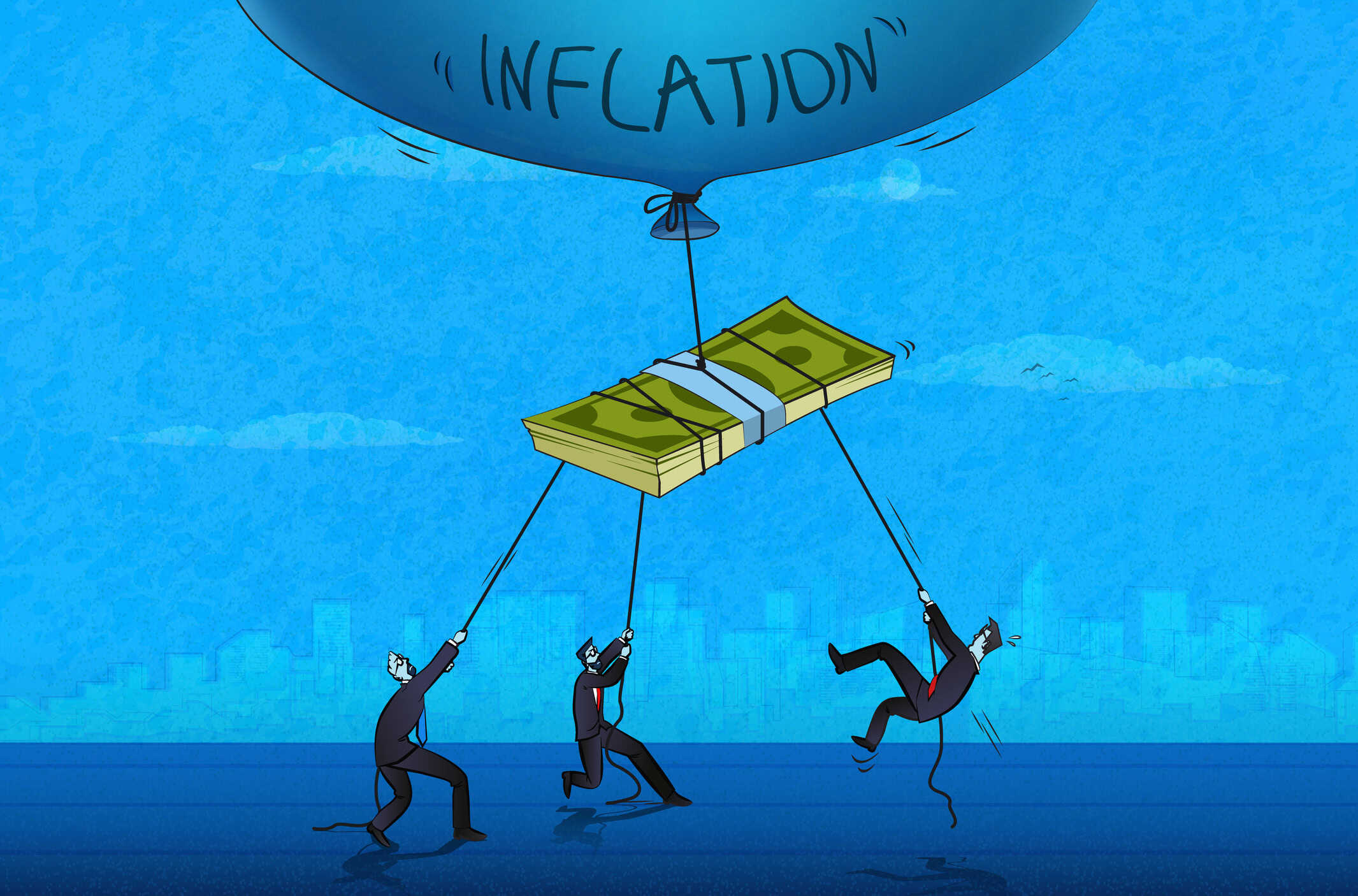
Just because inflation readings are currently low does not mean that inflation is not present in the system. To understand our viewpoint in this regard, let’s first examine some of the more common readings of inflation.
Published: March 21, 2012 | Author: Kevin Mahn |
Kevin Mahn, commodity prices, inflation, Hennion & Walsh, inflation-proof your portfolio, core inflation Federal Reserve
|
|
Thus far this year, during the first two months of 2012, according to Bloomberg, we have witnessed an 18% increase in the price of crude oil based on the ICE Brent Crude Oil Active Month Index and a 16% increase in the price of gasoline based on the Nymex Gasoline Active Month Index. With respect to the latter, with gasoline prices now averaging $3.74 per gallon for regular grade gasoline across the United States and some experts calling for prices to exceed the peak observed in July of 2008, many are now wondering how high gasoline prices will go (especially during the upcoming summer driving season) and what can be down to counteract these rising prices.
|
|
The S&P 500 index posted a total return of 4.48% for the month of January. This marked the best performance for the U.S. stock market in the month of January in more than a decade. Additionally, the Dow Jones Industrial Average itself rose 3.55% for the first month of the year. It is fair to surmise that we are certainly off to a good start in 2012.
Published: February 01, 2012 | Author: Kevin Mahn |
Kevin Mahn, S&P 500, volatility, asset allocation strategy, Hennion & Walsh
|
|
Riding Out the “U”: Modest Growth and Mounting Optimism Following a year of heightened stock market volatility marked by global political uncertainty, here is our current outlook for the economy and markets in 2012, where more volatility and political uncertainty is expected.
Published: January 23, 2012 | Author: Kevin Mahn |
jobs, asset allocation strategy, Hennion & Walsh, consumer confidence, debt burden, Euro-zone
|
|
Consumer spending currently accounts for approximately 70% of economic growth, as measured by Gross Domestic Product (GDP) in the United States. Hence, any news with respect to increases in consumer spending is greeted warmly by the markets looking for some signs of sustainable economic growth momentum. With this information as the back-drop, let’s review some of the more recent reports related to the spending activities of American consumers.
Published: December 14, 2011 | Author: Kevin Mahn |
Kevin Mahn, Gross Domestic Product, consumer spending, Hennion & Walsh
|
|
Judging by the market’s overwhelmingly positive reaction last week to the announcement of a rescue package on the part of European leaders for the ongoing saga with Greece, one would have thought that Greece was the only obstacle preventing the stock market from moving higher. While we believe that there are still many other headwinds (Ex. jobless claims, high unemployment, weak consumer spending, lackluster real estate market, rising commodity prices, etc…) confronting the economic recovery and stock markets, this European dominated market sentiment was confirmed this week as the markets have now given back approximately 500 points (at the time of writing this post) of their recent gains over renewed concerns that the terms of the most recent rescue package may not be accepted by the Greek government and/or be enough to prevent further contagion and fully stabilize affected European banks. It remains our contention that solving the overall European debt crisis unfortunately is not that simple.
Published: November 01, 2011 | Author: Kevin Mahn |
Kevin Mahn, Hennion & Walsh, Euro, debt burden, Euro-zone
|
|
While the global commodity markets turned considerably lower during the third quarter of 2011, we do not believe that a sustained drop in commodity prices is likely. Worldwide demographic trends will continue to place supply pressures on several commodity types, notably food and energy, while increased market volatility will likely result in continued investor appetites for precious metals.
Published: October 25, 2011 | Author: Kevin Mahn |
Kevin Mahn, commodity prices, Hennion & Walsh, equity markets
|
|
On this day, we mourn the loss of Steve Jobs, Apple’s co-founder and creative genius. We also mourn the loss of the innovation, perseverance and entrepreneurial spirit that Steve Jobs embodied and which once defined the U.S. economy. Apple built itself from a small start-up (i.e. 2 people) working out of a garage into a company with 300 retail stores in 11 countries and whom, at one point this summer, held the two distinctions of: 1) having more cash reserves than the U.S. Treasury and 2) surpassing Exxon Mobil as the world’s valuable company. The company used opportunities available to it within the capital markets to leverage technology to answer the everyday, yet often over looked, needs of the American consumer. In doing so, they currently employs close to 50,000 people.
Published: October 06, 2011 | Author: Kevin Mahn |
Kevin Mahn, recession, U.S. economy, Hennion & Walsh
|
|
The Federal Reserve took another step today as part of their increasingly activist role in the capital markets in trying to provide further stimulus to a U.S. economy that is struggling to stand on its own legs.
Published: September 21, 2011 | Author: Kevin Mahn |
Kevin Mahn, Federal Reserve, U.S. Treasuries, Hennion & Walsh, Government debt
|
|
Conditions appear ripe for a further increase in Mergers & Acquisitions (M&A) activity for the balance of 2011. To appreciate this sentiment, consider that cash sitting on U.S. corporate balance sheets is at its highest relative level in decades. Likely uses for this idle cash could include business expansions, stock buy-backs, dividend increases or M&A activity. Given the many economic headwinds facing the U.S. economy, including, but not limited to, high unemployment, low consumer spending, increasing commodity prices and the fear of tightening credit given the ongoing sovereign debt crisis in Europe, prospects for increased corporate earnings stemming from increased sales seem difficult.
Published: September 13, 2011 | Author: Kevin Mahn |
Kevin Mahn, Hennion & Walsh, Mergers & Acquisitions
|
|
Heading into the 10th anniversary of the September 11 terrorist attacks, Hennion and Walsh remembers all those whose lives were lost or changed forever on that infamous day. Our thoughts remain with all of the victims of those horrendous attacks and their respective families.
|
|
The labor picture is not improving in the U.S. and prospects for any type of a much needed short-intermediate term recovery grow more and more dubious with each passing jobs report.
Published: September 07, 2011 | Author: Kevin Mahn |
jobs, Economy, Hennion & Walsh, jobless report, jobless recovery, job creation
|
|
During a week when the majority of the East Coast is still recovering from the devastating effects of Hurricane Irene, the market warmly received some good economic news for once. However, as has been the case previously, the headline numbers, upon further review and dissection, may not be as positive as initially reported and received.
Published: August 31, 2011 | Author: Kevin Mahn |
Kevin Mahn, GDP, consumer spending, housing market, Hennion & Walsh, consumer confidence
|
|
Our thoughts and well wishes go out to all of our clients on the East Coast that were affected by Hurricane Irene. As always, please know that we, at Hennion & Walsh, are here to help you with any of your financial needs or concerns.
|
|
Investopedia defines stagflation as a condition of slow economic growth and relatively high unemployment - a time of stagnation - accompanied by a rise in prices, or inflation. Given the economic data reports that I have observed thus far in 2011 (not just over the past two weeks), I believe that it is fair to say that stagflation is knocking on the door.
Published: August 19, 2011 | Author: Kevin Mahn |
Kevin Mahn, GDP, housing market, inflation, Hennion & Walsh, jobless report
|
|
After markets closed for the week, credit rating agency Standard & Poor’s (S&P) announced on Friday, August 5, 2011, that it had cut the sovereign debt rating of the United States of America to AA+ from AAA. The ratings cut was the first downgrade of the U.S. AAA credit rating by S&P since S&P initially granted the AAA rating to the U.S. in 1941.
Published: August 08, 2011 | Author: Kevin Mahn |
credit crisis, Economy, Hennion & Walsh, credit rating services, debt outstanding, debt burden
|
|
While I believe that yesterday’s 512 point decline in the stock market (which marked the 9th largest single day point decline in history), as measured by the Dow Jones Industrial Average (DJIA), was extreme, I do believe that a form of a stock market correction, with respect to the now 29 month long bull market, was long overdue.
|
|
It is our contention at Hennion & Walsh that the market has essentially priced in the belief that an agreement on raising the current debt ceiling will happen. It is just now a question of when the agreement will be finalized and what the length and terms of the finalized agreement will be. Unfortunately, the finalization of the agreement may not be enough to avert further consideration of a downgrade to the U.S. AAA credit rating by the rating agencies. Regardless, after this current debt crisis is behind us, investors, in our opinion, will return their focus to a stalling economic recovery that is facing multiple headwinds. These headwinds include a stubbornly high unemployment rate, a disturbing trend of increasing jobless claims, elevated commodity prices, a lackluster residential real estate and increasing sovereign debt problems overseas and, as previously discussed, on our homeland.
Published: July 29, 2011 | Author: Kevin Mahn |
Kevin Mahn, GDP, Hennion & Walsh, economic growth, debt burden
|
|
Many U.S. Corporations continue to have very healthy balance sheets with significant percentages of cash on hand. To this end, according to a January 10, 2011 report entitled, A Cash Buildup and Business Investment, by Robert Sadowski of the Federal Reserve Bank of Cleveland, highlighted cash holdings and other liquid assets as a share of total corporate assets rising around by approximately 2% since the start of the most recent recession. This share; 7.4% as of September 2010, is the highest relative cash % for U.S. corporations since the mid-1950s. The cash on hand could support potential business expansions, dividend increases, stock buy-backs and/or mergers or acquisitions (M&A). All of these potential deployments of cash listed above could be positive not only for the each respective company but also for the stock market and economy as a whole.
Published: July 25, 2011 | Author: Kevin Mahn |
Kevin Mahn, Economy, Hennion & Walsh, Corporate Balance Sheet, Cash
|
|
When we, at Hennion & Walsh, consider that Washington is currently considering increasing our self-imposed debt ceiling to allow the U.S. to issue more debt to service existing debt already outstanding, we can’t help but think that we are just “kicking the can” further down the road.
|
|
Federal Reserve Chairman Ben Bernanke announced on Wednesday, during another round of a previously unprecedented press conference, that the Federal Reserve Board Members and Federal Reserve Bank Presidents have revised their economic growth forecasts for the balance of 2011 and for 2012 and 2013 as well.
Published: June 28, 2011 | Author: Kevin Mahn |
Kevin Mahn, GDP, unemployment, inflation, Hennion & Walsh
|
|
May’s Consumer Price Index (CPI) data was released by the Bureau of Labor Statistics (BLS) today and the results were concerning from an inflationary standpoint but perhaps not as concerning as initial headlines may suggest.
Published: June 15, 2011 | Author: Kevin Mahn |
Kevin Mahn, inflation, Hennion & Walsh, core inflation Federal Reserve, Inflationary pressures
|
|
According to the Mortgage Bankers Association (MBA), in a June 8, 2011 report entitled, “Mortgage Applications Decrease in Latest MBA Weekly Survey” the average interest rate for 30-year mortgages decreased to 4.54%, which is the lowest rate observed since November 19, 2010. Despite the historically low rate of interest, and the seemingly available supply of credit, applications for mortgages are not increasing, as one might expect, but actually are continuing to decline. According to the MBA, as of the week ending June 3, 2011, mortgage loan applications, as measured by the seasonally adjusted Purchase Index, decreased by 4.4% over the course of the previous week and by 3% over the month of May. Looking back even further, applications for mortgage loans are down over 15% on a year-over-year basis as of May 2011.
|
|
A “triple whammy” of disappointing economic data reports hit the newswires today. Poor reading on private job creation, housing and manufacturing data led to an about-face in the stock as investors are seemingly starting to now question the strength and sustainability of the economic recovery in the U.S.
Published: June 01, 2011 | Author: Kevin Mahn |
Kevin Mahn, jobs, housing market, Hennion & Walsh, manufacturing jobs, job creation
|
|
Recent economic indicators seem to be suggesting that any potential momentum that may have been mounting with respect to the U.S. economic recovery may be coming to a halt, or, at a minimum, slowing down. According to The Associated Press in a May 19, 2011 article entitled, “Ahead of the Bell: Leading indicators seen rising”, Economists believe that The Conference Board's index of leading economic indicators likely increased by 0.1% in April of 2011*. While this would mark the 10th straight monthly gain in this data point, it would also represent the slowest increase rate since August of 2010.
Published: May 20, 2011 | Author: Kevin Mahn |
Kevin Mahn, GDP, housing market, inflation, Hennion & Walsh, Employment
|
|
Hewlett-Packard dealt a strong blow to what was seemingly shaping up to be a good 1st quarter earnings season for U.S corporations. Hewlett-Packard Co. reported a small increase in second-quarter profit and, perhaps on a more concerning note, lowered its forecast for the second quarter as well as for the full fiscal year citing weakness in the personal computer and services businesses. A further look into the 1st quarter 2011 Earnings Season Report Card perhaps signals another warning flag that perhaps the 1st quarter wasn’t as strong as many believed and, further, that the economic recovery is not advancing at as fast a pace as many predicted.
Published: May 17, 2011 | Author: Kevin Mahn |
Kevin Mahn, S&P 500, Hennion & Walsh, earnings announcements, S&P 500 companies, earnings reports
|
|
Recent declines in home values have confirmed our belief, at Hennion & Walsh, that the real estate market recovery (or lack thereof) could be one of the areas that hold back any significant economic recovery gains in 2011. This belief stems not only from a review of existing sales activity in the residential real estate market but also from the historic number of defaults and foreclosures that took place in 2010 leaving a large inventory of available homes.
Published: May 13, 2011 | Author: Kevin Mahn |
Kevin Mahn, housing market, housing recovery, Hennion & Walsh
|
|
One of Investors Business Daily’s headlines on Monday, May 9, 2011, was, “Private Hiring Best in Five Years, But Jobless Rate Rises.” With respect to the former, non-farm employment increased by 244,000 jobs in April of 2011, according to the Bureau of Labor & Statistics, beating Moody’s Consensus Estimate of 185,000 jobs. Interestingly, the private sector led the way this time around, adding 268,000 jobs while net increases in the public sector were actually slightly negative. Some investors seized on the news, potentially believing that the data results provide evidence that the economic recovery is transitioning from the days of Government led economic stimulus to a self-sustaining economy driven by the private sector.
Published: May 11, 2011 | Author: Kevin Mahn |
Kevin Mahn, GDP, unemployment, Economy, Hennion & Walsh, U-3 rate
|
|
In preparing for an interview on Fox Business News regarding oil related Exchange-traded Funds (ETFs), I came across some interesting information on the current oil related products available that we thought appropriate to share. Given the dramatic rise in the price of Oil this year alone, coupled with the recognition that oil remains the lubricant that turns the global economic machine, one would be hard pressed to find an advisor or individual investor who isn’t considering an oil oriented investment for their portfolios. ETFs have provided these investors with several different types of opportunities to add exposure to the energy sector, and oil in particular. However, as with other ETFs, the devil is in the details and investors need to conduct their due diligence and understand the structure of each available ETF before making an investment decision.
Published: April 21, 2011 | Author: Kevin Mahn |
Asset allocation, Kevin Mahn, ETFs, oil ETFs, Hennion & Walsh, ETNs
|
|
Inflation readings are currently low but this does not mean that inflation is not present in the system. Remember that the technical definition of inflation is when money flows into the system at a higher velocity than the rate at which it is flowing out of the system. This has certainly occurred in the U.S. economy since 2008.
Published: April 19, 2011 | Author: Kevin Mahn |
Kevin Mahn, inflation, Hennion & Walsh, core inflation Federal Reserve
|
|
According to the April 7, 2011 Reuters article entitled, “Silver defies bears to target $40/oz and beyond” Silver is the top performing previous metal thus far in 2011, rising by more than 29% during the first quarter of the New Year. In contrast, Gold has risen approximately 2.8% over the same timeframe. Silver, in fact, is now close to $40 an ounce, which is the highest level this commodity has traded at in 31 years. Some analysts are even forecasting Silver prices to top $50 an ounce by the end of this year.
Published: April 08, 2011 | Author: Kevin Mahn |
commodity prices, gold, Hennion & Walsh, exchange-traded products, ETP, gold prices
|
|
Consumer spending rose a higher than expected 0.7% for the month of February, a 0.3% increase after adjusting for inflation. This marked the 8th consecutive month of consumer spending increases. Consumer spending increases are generally indicative of a recovering economy as consumer spending accounts for over 70% of economic growth as measured by Gross Domestic Product (GDP). More positive news, from a GDP growth perspective, could also be found in reports that showed Personal Income increasing 0.3% last month and the Savings rate falling to 5.8%.
|
|
In addition to the real threat of a nuclear disaster in Japan based upon damage sustained at a nuclear plant in northeastern Japan following the recent 9.0-magnitude earthquake, and ensuing tsunami, that decimated the Far East country late last week, collateral damage to the mounting global economic recovery is also expected.
Published: March 14, 2011 | Author: Kevin Mahn |
Kevin Mahn, GDP, economic recovery, Hennion & Walsh
|
|
One of the primary drivers behind a lot of the optimism on Wall Street for 2011 is the relative health of the balance sheets of U.S. corporations. Many corporations seem to have learned their lessons from the great credit crisis of 2008 and, in turn, taken the opportunity to de-leverage (i.e. reduce their own respective levels of debt). Given the growth in corporate earnings in 2010 and the overall lack of corporate spending, cash on corporate balance sheets has ballooned.
|
|
Recent turbulence in middle-east countries, such as Tunisia, Egypt and Libya, has affected both oil markets and stock markets worldwide due to the well-recognized role of Oil as the lubricant of the global economic machine. We, at Hennion & Walsh, have even observed a growing negative correlation between the price of oil and the performance of the stock market.
Published: March 08, 2011 | Author: Kevin Mahn |
Portfolio strategy, Kevin Mahn, S&P 500, oil market, Hennion & Walsh
|
|
Unrest in Wisconsin escalated late last week as newly elected Republican Governor Walker pushed ahead with his desire to pass his “budget-repair bill.” The bill is intended to plug a large shortfall in the state’s current budget and asks for increased contributions by certain state employees to their own pensions and health insurance benefits. The proposed bill also contained revisions to existing collective bargaining agreements which created tension amongst many union workers. Wisconsin could prove to be a pivotal state with respect to the relationship between state governments and labor unions as other states, such as Indiana and Ohio, facing similar budget issues are considering similar measures in the near future.
Published: February 24, 2011 | Author: Kevin Mahn |
Asset allocation, Portfolio strategy, Kevin Mahn, commodity prices, oil market, Hennion & Walsh
|
|
As part of our annual portfolio reconstitution process at Hennion & Walsh, we strive to build forward looking, asset allocation-oriented portfolios based on our internal views of where we believe both the markets and economy are heading for the next year. For your benefit, as we did last year, we have provided our four potential scenarios for 2011, based upon information available to our research team at this point in time, with an internal probability assigned to each, below:
Published: February 15, 2011 | Author: Kevin Mahn |
Kevin Mahn, Economy, bear market, bull market, Hennion & Walsh, equity markets
|
|
The Dow Jones Industrial Average (DJIA) has officially broken through the 12,000 level and now stands above where this widely recognized U.S. stock index stood on September 15, 2008 - the day that Lehman Brothers filed for the largest bankruptcy in the history of our country. That event marked the day that many analysts suggest the “Great Global Credit Crisis” was pushed into high gear resulting in a historic bear market that lasted until March 9, 2009.
Published: February 02, 2011 | Author: Kevin Mahn |
Kevin Mahn, GDP, DJIA, Dow Jones, economic recovery, Hennion & Walsh
|
|
Anti-government protests in Egypt reached a fevered pitch in Cairo on Friday as demonstrators were demanding an end to the thirty year rule of incumbent President Hosni Mubarak, who is now 82 years old. At the core of the protests are frustrations over high rates of unemployment, rampant inflation (Ex. rising food prices) and increasing poverty levels across this Middle East country. These frustrations have been percolating over the past few years but have intensified over preceding weeks.
Published: January 31, 2011 | Author: Kevin Mahn |
Portfolio strategy, Kevin Mahn, emerging markets, Economy, Hennion & Walsh, diversified portfolio strategy
|
|
Every time we think that we see a glimmer of hope with respect to the employment picture in the U.S., we receive another concerning jobs report. During the first couple of weeks in January, we have already received reports showing a decrease in the U-3 unemployment rate, an increase in nonfarm payrolls (but not by as much as the analysts were expecting) as well as an increase in the number of weekly initial jobless claims.
Published: January 25, 2011 | Author: Kevin Mahn |
Kevin Mahn, U.S. economy, Hennion & Walsh, unemployment rate
|
|
Given that it is officially prognostication season for 2011, many Financial Analysts, Market Strategists and Economists on Wall Street have been busy formulating their market and economy predictions for the New Year.
|
|
It’s been quite a year in the economy and in the markets in 2010. The former is stuck in neutral trying to find its footing to establish sustainable economic growth and put America back to work again while the latter continues to race full speed ahead despite the former. With the partial changing of the guard in Washington, much uncertainty exists with regards to the future direction of federal legislation and intervention. When this uncertainty is coupled with mounting international tensions and amassing debt concerns, many investors find themselves cautious and concerned.
Published: December 23, 2010 | Author: Kevin Mahn |
Asset allocation, Personal finance, Portfolio strategy, Kevin Mahn, Hennion & Walsh
|
|
The Federal Reserve engaged in its most recent round of quantitative easing in an effort to help spur the economy, boost jobs and raise inflation (yes, raise inflation) by supplying the market with more liquidity to meet loan demand. The problem is, as we see it at Hennion & Walsh, that there is no demand in the market for more loans.
Published: December 16, 2010 | Author: Kevin Mahn |
Portfolio strategy, Kevin Mahn, Federal Reserve, Economy, Hennion & Walsh, Economy of the United States
|
|
Asia appears to be in a state of flux as tensions between North Korea and South Korea intensified over the past weekend as China and the United States were pulled further into the conflict. The people of South Korea seem to be unified behind their stance of pushing back to prevent any future attacks, similar to what occurred last week, by North Korea. On the other hand, the people of North Korea, which many believe to be in possession of nuclear weapons, seem to not be backing down from any of the political or diplomatic pressures resulting from their recent actions.
Published: December 02, 2010 | Author: Kevin Mahn |
Asset allocation, diversified portfolio, diversified portfolio strategy, Bond market, asset classes, capital markets
|
|
The retail holiday shopping season seemingly got off to a good start after Thanksgiving as evidenced by the following statistics released by the National Retail Federation in November 28, 2010 article entitled, “Black Friday Weekend Sees Bigger Crowds, $45 Billion in Spending”
|
|
We, at Hennion & Walsh, believe the U.S. economy will continue to struggle to build any type of sustainable recovery in the face of historically high levels of unemployment, continued fears over excess leverage and lack of any meaningful gross domestic product (GDP) growth. Our primary concern centers on job growth. According to the Bureau of Labor Statistics, the current U-3 unemployment rate stands at 9.6%. However, when one considers the wider encompassing U-6 unemployment rate, which counts not only people without work seeking full-time employment (i.e. the more familiar U-3 rate), but also counts marginally attached workers and those working part-time for economic reasons, of 17.1%, it begins to become very difficult to imagine a scenario where consumers will start to spend at the levels needed to build a sustainable economic recovery.
Published: November 01, 2010 | Author: Kevin Mahn |
Portfolio strategy, GDP, S&P 500, Hennion & Walsh, Double-Dip Recession, earnings reports
|
|
The Federal Reserve has been clear in its intentions to stand ready to step-in and further stimulate the economy when, and if, needed. The stimulation would be provided through further doses of quantitative easing as lowering interest rates further is a tool that has now pretty much been taken away from the Fed given the historic low level of interest rates today.
Published: October 28, 2010 | Author: Kevin Mahn |
Portfolio strategy, Federal Reserve, portfolio performance, Federal Funds Target Rate, Federal Funds Rate
|
|
Many believe that Republicans will win back a large number of congressional seats and could even potentially win back control of Congress during the upcoming mid-term election cycle. Accepting this as a likely reality, the question then becomes what the impact will be on the stock market, as a whole, as a result.
Published: October 26, 2010 | Author: Kevin Mahn |
Investments, Dow Jones Industrial Average, Investment strategy, Hennion & Walsh, investment strategies, Elections
|
|
Wells Fargo’s Chief Macro Strategist Gary Thayer recently wrote in a September 13, 2010 article entitled “The Week” that, “…we’ve been through a lot since the 9/11 terrorist attacks” including “…two recessions, two wars, a housing boom and bust, a spike in energy prices and the greatest financial crisis since the Great Depression.” While American businesses seem to have managed to handle this pretty well (Ex. after tax corporate profits are at an all time high), Thayer believes that American consumers are not as optimistic and that investor sentiment has taken an understandably big hit since 9/11.
|
|
We, at Hennion & Walsh, believe the U.S. economy will continue to struggle to build any type of sustainable recovery in the face of historically high levels of unemployment, continued fears over potential sovereign defaults and political uncertainties leading into this fall’s mid-term elections. Our primary concern centers on job growth. According to the Bureau of Labor Statistics, the current U-3 unemployment rate stands at 9.6%. However, when one considers the wider encompassing U-6 unemployment rate, which counts not only people without work seeking full-time employment (the more familiar U-3 rate), but also counts marginally attached workers and those working part-time for economic reasons, of 16.5%, it begins to become very difficult to imagine a scenario where consumers will start to spend at the levels needed to build a sustainable economic recovery. Despite this, we view a double-dip recession scenario as extreme and unlikely based upon several different economic data points.
Read the entire post by clicking on the title.
|
|
Many have claimed that the decade of the 2000s was a lost decade for stock investors. When you look at the returns of the S&P 500 index over the decade, it is hard to challenge the validity of this claim. For the period of December 31, 1999 through December 31, 2009, the S&P 500 index had an annualized simple price return of -2.72%. When dividends are factored in, the results do not get much better as annualized total return for the S&P 500 index (with dividends reinvested back into the index) over the same timeframe was -0.95%. This marked the first time since the 1930s that a decade produced a negative simple price return for the S&P 500 index and the only decade that the S&P 500 index ever produced a negative total return since our data sources began tracking the index back in 1926.
Published: September 08, 2010 | Author: Kevin Mahn |
Asset allocation, Portfolio strategy, Kevin Mahn, Investment strategy, Hennion & Walsh, Standard & Poors
|
|
In our July 22, 2010 post entitled, “The Broader Implications of a Housing Rebound,” we questioned how much of the surge in existing home sales seen thus far in 2010 was solely attributable to the federal tax credit program. While the final answer has yet to be determined, initial feedback seems to be pointing to a significant level of attribution.
|
|
The markets stormed out of the gates this morning on news that the Chinese government planned to lift the 2 + year old artificial peg of its Yuan, or Renminbi, currency to the U.S. Dollar. While only minor increases in the value of the currency are expected initially, market professionals are taking a positive, long term view to this announcement.
|
|
Nationally recognized research firm Dalbar recently produced the results of a study on the overall performance effects of individual investor behavior. In doing so, they compared the returns of the stock market (as defined by the S&P 500 index for these purposes) and the returns of the average individual investor in equities over a 20 year period that started on December 31, 1989 and ended on December 31, 2009. Interestingly, the study showed that the average return of the S&P 500 over that period was 8.20% while the average return of the individual investor was just 3.17% over the same time period. This represents a relatively stark 5%+ difference.
|
|
We, at Hennion & Walsh, are observing growing momentum towards the stabilization of the residential real estate market as well as an intriguing opportunity for inclusion of this alternative asset class in diversified growth portfolios.
|
|
In terms of the potential for a near-term pullback in the equities market, our research suggests that the probability of occurrence may be increasing. As you will recall from an earlier Portfolio Strategy News post on June 4, 2009, we contend that the S&P 500 200 Day Moving Average, with a 5% margin of safety, can be utilized, in conjunction with other market data, as a fairly reliable overall market timing statistic. It is our opinion, at Hennion & Walsh, that merely crossing through the 200 Day Moving Average is not a sufficient signal alone. When markets are moving quickly in the midst of seemingly trendless volatility, the average could be crossed in both directions on multiple occasions without presenting any clear market signals. As a result, we utilize a 5% margin of safety for our own internal assessments.
|
|
It should not be surprising to see that consumer confidence is waning and yet the market appears to have been caught off-guard by the magnitude of the recent decline in consumer confidence. While reports showing that growth in China is beginning to slow down may have contributed to the turnaround in the equity markets, the major culprit appears to have been the Conference Board’s consumer confidence reading for June which showed the index dropping from 62.7 to 52.9 - close to a 16% month over month decline! The drop even caught the experts by surprise as economists were expecting a reading of 62.8.
|
|
Exchange-traded products (ETPs) that allow an investor to short a particular asset class or sector represented by an underlying index have grown in popularity as the market has grown more volatile since the great global credit crisis of 2008. These short or “inverse” ETPs, flat and leveraged, have also been the subject of a lot of debate these days as market participants and regulators have attempted to address the topic with respect to suitability and adequate disclosure for individual investors.
|
|
To understand the disappointment, one needs to drill down into the jobs data. The U.S. Labor Department reported that nonfarm payrolls rose by 431,000 last month. On the surface, this sounded very promising for an economy that needs to put its citizens back to work to help fuel a stalling economic recovery. However, it was also reported that economists were expecting approximately 515,000 jobs to be added and 411,000 of the 431,000 jobs that were added (i.e. 95%) were actually temporary jobs with many tied to this year’s census project. Essentially, there was no job growth despite the headlines.
|
|
As unemployment increases, consumer confidence decreases. As consumer confidence decreases, consumer spending decreases. As consumer spending decreases, corporate earnings decrease - absent any efficiency gains or work force reductions.
|
|
According to the May 2010 Morningstar Direct Fund Flows Update, investors continue to draw money out of money market funds at a record pace. In April alone, investors pulled out $118.8 billion. Year-to-date ("YTD") in 2010, money market outflows now total $443 billion, which surpasses the entire amount drawn out or money market funds in 2009 - in just four months!
Published: May 14, 2010 | Author: Hennion and Walsh |
Investor education, Portfolio strategy, Kevin Mahn, investors, Hennion & Walsh, U.S. stock market, mutual funds, capital markets, Bond mutual funds, U.S. open-end mutual funds, money market funds, May 2010 Morningstar Direct Fund Flows Update
|
|
The Economist termed this past weekend's emergency bailout package for Greece as "shock and awe" due to the size of the $146 Billion combined European and IMF commitments to the country. The widely read magazine went further to suggest that they hope the package will convince the markets that loan commitments will cover the potential bond losses and contain the issue from spreading into Portugal and, perhaps more dangerously, into Spain. This is now the third attempt at a solution for the sovereign debt crisis in Greece. Previously the Euro-zone leaders seemed to be trying to buy time but spiraling Greek bond rates, which intensified after Moody's recently cut Greek bonds ratings to junk status, along with fears of the contagion spreading to Spain - which has a much larger GDP than Greece and Portugal combined - forced their hand.
Published: May 07, 2010 | Author: Hennion and Walsh |
Portfolio strategy, Kevin Mahn, US dollar, bear market, Hennion & Walsh, Euro, Greece, IMF, $146 Billion, shock and awe, emergency bailout, The Economist, sovereign debt crisis, Greek economic crisis, volatile markets, economic fundamentals
|
|
According to the Wall Street Journal, U.S. consumer spending rose twice as fast as income in March of 2010 as personal savings dropped to its lowest level in 18 months. The Commerce Department reported, "Consumer spending increased by 0.6% from the prior month, likely lifted by government efforts to spur economic growth, but personal income rose just 0.3% on a weak labor market. As a result, the U.S. saving rate dropped to 2.7%, its lowest level since September 2008."
|
|
The global equity markets machine continued to churn full speed ahead in April as evidenced by the S&P 500's monthly advance of 1.25% and the DJIA's increase of 1.06%. As a result, the S&P 500 and the DJIA are now up 7.05% and 6.42% respectively thus far in 2010. This early 2010 gain stands on top of the meteoric rise that took place in the equity markets during the final three quarters of 2009. This situation has left many investors in a precarious state. On the one hand, they feel as though they may have missed out on a large part of the market recovery - which probably is true if one is only looking at the U.S. stock market (Large Cap companies in particular). On the other hand, they are growing more and more concerned that a pullback, or extended pause, in the equity markets is increasing in likelihood -which is probably also true especially considering the continuing difficulties that the P.I.I.G.S. countries (i.e. Portugal, Italy, Ireland, Greece and Spain) are presenting in terms of their own sovereign debt.
Published: May 04, 2010 | Author: Hennion and Walsh |
Portfolio strategy, Kevin Mahn, S&P 500, DJIA, Dow Jones Industrial Average, economic recovery, Hennion & Walsh, economic trends, equity markets, Standard & Poor, Portugal, Ireland, Italy, P.I.I.G.S., Large Cap companies, global equity markets, stock market recovery, Greece and Spain
|
|
Briefing.Com recently noted that as of the end of last week, about one third of the S&P 500 firms reported earnings results for the 1st Quarter of 2010. Bespoke and Briefing.com both highlighted that about 83% of the earnings reports thus far beat analysts' estimates. To put this in a historical perspective, Thomson Reuters pointed out that, going back to 1994, 60% of earnings reports typically beat analysts' estimates in a given quarter. As a result, it can reasonably be concluded that it was a stellar first quarter for the majority of U.S. large cap firms.
|
|
The DJIA has just crossed 11,000 - a significant milestone in the continuing recovery of this widely recognized U.S. blue-chip index. In fact, the last time the Dow closed above 11,000 was back on September 26, 2008. However, before everyone starts to uncork their champagne bottles, we, at Hennion & Walsh, would suggest that it is too soon to signal "all-clear" for the equity markets and too soon to declare an official end to this current U.S. recession.
Published: April 13, 2010 | Author: Hennion and Walsh |
Kevin Mahn, U.S. economy, National Bureau of Economic Research, DJIA, Dow Jones Industrial Average, Hennion & Walsh, NBER, U.S. recession, U.S. blue-chip index, Institute for Supply Management, ISM, heightened volatility, domestic equity markets
|
|
The likelihood of the Chinese Yuan starting to appreciate relative to the U.S. Dollar has increased recently as a result of pressure from the U.S. government on the Chinese government to lift the so-called "peg" that is in place between the Chinese Yuan and the U.S. Dollar in addition to mounting concerns that inflation is completely eroding the current rate of interest that Chinese investors are earning on bank deposits.
Published: March 12, 2010 | Author: Hennion and Walsh |
Investor education, global economy, Hennion & Walsh, Chinese Yuan, currency peg, Chinese government
|
|
In a positive economic development, Mergers & Acquisitions ("M&A"), as many analysts have predicted, have already started to heat-up in early 2010. In fact, BersteinReseach has forecasted at 35% increase in M&A activity in 2010. Some of the more noteworthy M&A deals that have been announced thus far in 2010 have included:
Published: March 10, 2010 | Author: Hennion and Walsh |
Kevin Mahn, financial markets, Mergers & Acquisitions, M&A, asset classes, financial trends
|
|
The current bull market will mark its official 1 year anniversary this week - March 9th to be specific. History suggests that this is a critical milestone and one in which investors should pay attention to. According to Bespoke Investment Group, of the 26 bull markets - with bull markets defined as at least a 20% rally that was preceded by at least a 20% decline in the S&P 500 - that have taken place in the history of the S&P 500, 13 of them (i.e. 50%) have lasted for more than one year. The average length and gain of bull markets that pass the one year anniversary mark is 4.4 years and 152.81% respectively. Furthermore, only two of the previously highlighted 13 one year + bull markets lasted fewer than 2 years.
|
|
As part of our annual portfolio reconstitution process at Hennion & Walsh, we strive to build forward looking, asset allocation-oriented portfolios based on our internal views of where we believe both the markets and economy are heading for the next year.
Published: March 03, 2010 | Author: Hennion and Walsh |
Kevin Mahn, consumer spending, unemployment, S&P 500, volatility, bear market, Hennion & Walsh, Transition Year, Deflationary Stagnation, L shape recovery, W shape recovery, Double-Dip Recession, Return of Inflation, V shape recovery, Bullish Recovery Surprise, sustainable growth, Japanese style, velocity of money, boomerang effect, Inflationary pressures
|
|
What to make of the Fed's Recent Interest Rate Hike
The Federal Reserve surprised virtually everyone after the markets closed yesterday by announcing their intentions to raise the Discount Rate by 0.25% (i.e. 25 Basis Points) from 0.50% to 0.75%. This marks the first time that the Federal Reserve has raised the Discount Rate since June of 2006.
Published: February 23, 2010 | Author: Hennion and Walsh |
Kevin Mahn, inflation, monetary policy, U.S. economic recovery, Interest rate, Discount Rate, Discount window, Federal Funds Rate
|
|
If you have been wondering what specifically has been one of the main culprits in the stock market devaluation in recent days, look no further than to a group of countries in Europe affectionately known as the P.I.I.G.S. The countries, which many believe are the weaker components of the Euro-zone, include Portugal, Ireland, Italy, Greece and Spain.
|
|
Using the Effective Federal Funds Rate as a proxy for interest rates, it is reasonable to conclude that interest rates are at historic lows and likely to only go higher.
Published: February 05, 2010 | Author: Hennion and Walsh |
Investor education, Portfolio strategy, Kevin Mahn, Federal Reserve, credit markets, Gross Domestic Product, US dollar, Economy, investors, Investment strategy, inflation, Hennion & Walsh, economic growth, economic trends, Federal Reserve System, Bond market, Interest rate, Effective Federal Funds Rate, Real GDP forecast, Real GDP Growth
|
|
The Commerce Department today reported a 5.7% increase in gross domestic product ("GDP"), at an annual rate, during the fourth quarter of 2009 - 5.7%! This exceeded the 4.8% consensus median forecast by close to 20% on a relative basis. It also followed a 2.2% GDP growth rate in the third quarter of 2009. So why is the U.S. stock market barely reacting to this seemingly positive trend? The answer to this question lies in some of the significant data components underlying this most recent GDP report.
Published: February 01, 2010 | Author: Hennion and Walsh |
Gross Domestic Product, GDP, unemployment, stock market, Investing, Business, U.S. stock market, economic growth, Stocks and Bonds, Economy of the United States, capital outlays, job creation, PCE, personal consumption expenditures
|
|
Earlier this morning, credit rating service Standard & Poor's ("S&P") revised its credit outlook on Japan to "negative" from "stable." This could seemingly pave the road to a future downgrade to Japan's current AA long-term rating. As part of rationale behind the revision to their credit outlook for the country, S&P cited concerns over amount of Japanese government debt outstanding. Japan's government debt is already among the highest in the world and S&P thinks the debt burden might peak at a level as high as 115% of their Gross Domestic Product ("GDP") over the next few years.
Published: January 28, 2010 | Author: Hennion and Walsh |
Kevin Mahn, Gross Domestic Product, GDP, Standard & Poor, Office of Management and Budget, Government debt, OMB, credit rating services, foreign investors, Fitch, Gross Federal Debt to GDP ratios, debt outstanding, debt burden, AA long-term rating, Japan, S&P
|
|
U.S. existing home sales fell by 16.7% in December 2009, to 5.54 million units, which was far worse than many analyst expectations. This report follows much better than forecasted existing home sales results this past Fall season - which culminated in a 26% surge over the three months prior to December.
Published: January 27, 2010 | Author: Hennion and Walsh |
Kevin Mahn, consumer spending, unemployment, Hennion & Walsh, commercial real estate, residential real estate, United States Economy, Real estate, Commercial property, U.S. Housing Market, Real estate economics, Blue Chip Economic Indicators, high unemployment, poor housing numbers, National Association of Realtors, Add new tag, path to recovery, 1st Time Home Buyer Credit program, downside risk, analyst expectations, U.S. existing home sales
|
|
According to the Bureau of Labor Statistics, the current official unemployment rate is 10%. The official unemployment rate, often referred to as the U-3 rate, represents the total unemployed as a percentage of the civilian labor force.
Published: January 21, 2010 | Author: Hennion and Walsh |
Kevin Mahn, unemployment, Hennion & Walsh, unemployment rate, Bureau of Labor Statistics, Economy of the United States, Labor Movement, Labor force, Employment, full employment, alternative energy, manufacturing jobs, new jobs, marginally attached workers, total unemployed, U-6 rate, U-3 rate
|
|
In the annals of Wall Street lore, many professional investors believe that the 'January effect" has a positive impact on stocks during the initial weeks of a new year. The belief holds that investors who sold stock at the end of the previous year for tax reasons look to buy back stocks at the beginning of the new tax year, thus driving stock prices higher. In addition to tax-related trading, we believe that the January effect may be more pronounced this year than in previous years given the amount of money still sitting on the sidelines and in bond funds.
Published: January 05, 2010 | Author: Hennion and Walsh |
emerging markets, Business, Hennion & Walsh, Federal Reserve System, 2010 stock market outlook
|
|
Closed-end funds are funds with a fixed number of shares outstanding and, as a result, trade more like a share of common stock than their open-end fund cousins which trade at their net asset value ("NAV"). Shares of closed-end funds can trade at a price that is either a discount or a premium to their net asset value based upon market demand. This condition can often lead to much greater volatility and price dispersion for closed-end funds when compared to open-end funds. For example, according to the Stifel Nicolaus October 2009 Closed-End Funds Monthly Review report, closed-end funds have traded at an average discount to their NAV of 4.52% over the last ten-year period.
Published: December 14, 2009 | Author: Hennion and Walsh |
Investor education, Portfolio strategy, Kevin Mahn, investors, Mutual fund, Investing, Business, Hennion & Walsh, Net asset value, Closed-end fund, Stock, Fund, Open-end fund, NAV, Stifel Nicolaus October 2009 Closed-End Funds Monthly Review, year-end tax selling strategies
|
|
Last week, prior to the Thanksgiving holiday, the Dubai government announced that it will look to restructure Dubai World; a government owned conglomerate, and asked creditors for a six-month delay on outstanding debt payments. The total liabilities of Dubai World are estimated to exceed $60 billion with existing creditors spread across much of the developed and emerging world markets. The announcement took much of the world by surprise and caused the U.S. stock market to open over 200 points lower although the drop was essentially cut in half by the close of the shortened trading day last Friday as traders and investors put the announcement into perspective. Additionally, as I write this post, the United Arab Emirates has indicated that it would step in, as needed, to support local banks through a special liquidity facility. This should help to stem fears of a potential run on the local banks that could have negative ramifications throughout the region.
Published: November 30, 2009 | Author: Hennion and Walsh |
Investments, emerging markets, Investing, financial sector, Dubai, Dubai World, global capital markets, Dow Jones Emerging Markets Sector Titans Index
|
|
We have all heard the age-old wisdom that gold can provide for a hedge against inflation. The Federal Reserve has recently contended that inflation is not an immediate threat or concern to them. In fact, Ben Bernanke, Chairman of the Federal Reserve, said in a speech earlier this week that "the U.S. economy still faces considerable challenges but the most likely outcome is moderate growth with subdued inflation." Despite this, Gold has rallied significantly in 2009 - noticeably in recent weeks. What then is accounting for rising Gold prices?
Published: November 19, 2009 | Author: Hennion and Walsh |
Portfolio strategy, Kevin Mahn, Federal Reserve, commodity prices, US dollar, ETFs, investors, U.S. Treasuries, gold, Hennion & Walsh, threat of inflation, Ben Bernanke, hedge against inflation, gold prices, equity markets, bond markets, silver, palladium, platinum
|
|
I couldn't help but find it amusing yesterday when one of my fellow panelists during a discussion at The Art of Indexing Summit in New York City suggested that U.S. Treasury Bills, while once considered as a proxy for "risk-free return" perhaps are now a better proxy for "return-free risk." All kidding aside, many well-respected economists throughout the world are now calling into question the perceived safe haven status of U.S. Treasuries and, in a similar vein, if the U.S. Dollar will remain as the world's reserve currency. Regarding the latter, some have suggested that the U.S. Dollar could eventually be replaced by the Euro, the Japanese Yen or even the Chinese Yuan.
Published: November 02, 2009 | Author: Hennion and Walsh |
Kevin Mahn, Hennion & Walsh, U.S. Treasury Bills, Euro, Japanese Yen, Chinese Yuan, global credit crisis, U.S. Treasury Secretary Timothy Geithner
|
|
Consumer confidence in the United States appears to be waning after a recent wave of optimism. According to a recent Reuters/University of Michigan Survey of Consumers, consumer sentiment fell from 73.5 in September to 69.4 in October. Further, the Survey's economic outlook index also decreased, falling from73.5 in September to 67.6 in October.
Published: October 30, 2009 | Author: Hennion and Walsh |
Investor education, Kevin Mahn, consumer spending, U.S. economy, inflation, Hennion & Walsh, consumer confidence, corporate earnings., household net worth, national health care policy, high levels of unemployment
|
|
The Federal Funds Target Rate has been residing within the 0.00% - 0.25% range for all of 2009 thus far. The Federal Reserve has maintained this target range with the hopes of providing additional credit opportunities to allow for economic stimulus.
Published: October 26, 2009 | Author: Hennion and Walsh |
Kevin Mahn, Federal Reserve, US dollar, inflation, Hennion & Walsh, low interest rates, ETP, Exchange-traded Product, economic stimulus, Federal Funds Target Rate, 12MTA, 12 Month Treasury average, Treasury Bonds, bond yields, monetary tightening policy, foreign currencies, U.S. Treasury securities
|
|
According to Russell Investments, as of September 30, 2009, core inflation is currently at 1.40%, below the Federal Reserve's unofficial target range of 1.50% - 2.00%. Hence, many have concluded that inflation is not present and perhaps not an imminent threat. We, however, believe otherwise. We, at Hennion & Walsh, believe that the threat of inflation may be upon us already and the impact of inflation could have a significant impact on the economy and on the portfolios of individual investors.
Published: October 23, 2009 | Author: Hennion and Walsh |
Equities, inflation-proof your portfolio, core inflation Federal Reserve
|
|
According to Thomson Reuters, over 70% of companies beat their 2nd quarter estimates which marked the highest percentage of companies surpassing estimates since Thomson Reuters began tracking this type of data back in 1994. To put this in a historical perspective, in a typical quarter, approximately 61% of companies eclipse their estimates. One particular industry showing particular strength was Health Care which interestingly is also one of the only industries that has actually added jobs in the last twelve month period. However, we, at Hennion & Walsh, believe that third quarter earnings should be carefully dissected before reaching any forward-looking conclusions and further believe that this holiday season will likely disappoint and lead to lower fourth quarter earnings than many analysts are predicting at this point in time.
Published: October 21, 2009 | Author: Hennion and Walsh |
Kevin Mahn, economic recovery, corporate earnings., government stimulus, S&P 500 companies, fourth quarter earnings, Health Care
|
|
A recent study by Morningstar that was discussed in a Wall Street Journal article by Sam Mamudi entitled, "Active Management Loses in Risk Study," added further fuel to the fire of the ongoing debate over the merits of active and passive investment management strategies. As a reminder, active investment strategies generally attempt to outperform their associated benchmark indexes while passive investment strategies generally attempt to track, or stay in line with, their associated benchmark indexes. While it has widely been established that active mutual fund managers generally underperform their benchmark indices, the Morningstar study goes further to conclude that, on a risk adjusted basis, even more active mutual fund managers fall short. Specifically, the Morningstar study found that over the past three years, only 37% of actively managed mutual funds outperformed their associated Morningstar indexes on a risk, size and style adjusted basis. Put differently, 63% of actively managed mutual funds underperformed their associated Morningstar indexes over the past three years on these terms. The results were similar over five and ten year timeframes.
Published: October 15, 2009 | Author: Hennion and Walsh |
Kevin Mahn, Exchange-traded funds, ETFs, investors, Hennion & Walsh, Morningstar study, investment strategies, managed mutual funds, asset allocation plan, William Sharpe, Sharpe Ratio, investment management strategies, Active Mutual Funds, Index Tracking Mutual Funds
|
|
August retail sales soared far higher than expected, rising 2.7% during the month. Backing out the impact of the "cash for clunkers" program, retail sales, excluding autos, still rose by 1.1%. The overall gain, led by a 10.6% growth at auto dealers, was the strongest month over month gain since January 2006. The most positive aspect of these reports, in our view at Hennion & Walsh, was the strength observed in the traditional "back to school" segments such as department, apparel, sporting goods and hobby stores. While these are sequential gains and retail sales are still off last year's pace by approximately 5%, this data suggests there may be upside surprise potential for retail sales during the 2009 Holiday season.
Published: September 22, 2009 | Author: Hennion and Walsh |
Kevin Mahn, Hennion & Walsh, retail sales, cash for clunkers, back to school, 2009 Holiday season, 3rd quarter earnings, disappointing earnings, earnings announcements
|
|
Hennion & Walsh CIO, Kevin Mahn quoted in the Wall Street Journal.
|
|
Hennion & Walsh CIO, Kevin Mahn quoted in Dow Jones Newswires.
Published: September 09, 2009 | Author: Hennion and Walsh |
stocks, Kevin Mahn, economic trends, Hennion & Wash
|
|
Hennion & Walsh CIO, Kevin Mahn, quoted in SmartMoney.
Published: September 08, 2009 | Author: Hennion and Walsh |
Investor education, Kevin Mahn, unemployment, housing market, bull market, economic recovery, Hennion & Walsh, jobless report, unemployment rate, jobless recovery
|
|
According to an August 26th Bloomberg report by Shobhana Chandra, new home sales increased by 9.6% in July - the most since February of 2005. The gain, due in large part to historically low interest rates, incentives for first-time buyers and lending support from the Fed, translates to an annualized pace of 433,000 units. It also represents the 4th straight increase in new home sales, following an equally impressive 9.1% gain for June. Perhaps even more importantly, the number of houses for sale dropped to the lowest level in 16 years.
Published: August 31, 2009 | Author: Hennion and Walsh |
Portfolio strategy, Kevin Mahn, Hennion & Walsh, consumer confidence, low interest rates, first-time buyers, new home sales, residential real estate market
|
|
To borrow from an often used slogan, with slight improvisation, "It's the spending stupid." The surest way to get our economy back on track again is to have businesses and, even more importantly, consumers start spending again. In an economy where 70% of growth comes from spending, reports that show Americans saving more and spending less are generally not received positively by economists. The question then becomes how best to achieve this seemingly simple objective of encouraging individuals and companies to start spending again.
Published: August 11, 2009 | Author: Hennion and Walsh |
Kevin Mahn, recession, U.S. economy, economic recovery, economic trends, U.S. consumer, American consumer, consumer confidence
|
|
We have been repeatedly asked over the course of the last several weeks if there is in fact a bond (or more specifically a U.S. Treasury bond) bubble that is about to burst. A valid argument can be made for the likelihood of a drop in U.S. Treasury bond prices in the near future due to the following factors:
Published: August 06, 2009 | Author: Hennion and Walsh |
Portfolio strategy, Kevin Mahn, S&P 500, Hennion & Walsh, U.S. Treasury bonds, Long-term Treasury Bonds, Equities, fourth quarter, 4Q
|
|
According to a July 27, 2009 Economic Report posted on MarketWatch, June's new home sales rose by a stronger than expected 11% to a seasonally adjusted annual rate of 384,000. This represented the largest amount since November 2008. Furthermore, inventories of unsold homes fell 4.1% in the month June. The adage that real estate is all about location, location, location seems to still be relevant during this particular housing market recovery period. For example, the report also showed that sales rose over 29% in the Northeast, increased over 43% in the Midwest and climbed over 22% in the West while falling over 5% in the South. The overall improvement in sales is an encouraging sign that the housing market may finally be stabilizing.
|
|
Inverse exchange-traded funds ("ETFs") and exchange-traded notes ("ETNs"), both flat and leveraged, have been the subject of a lot of debate these days. I believe that a lot of the confusion and concern stems from a basic need for the industry as a whole to do a better job of educating the investing public about the rapidly evolving market of exchange-traded products. For example, the inverse products themselves may or may not be appropriate for long term investors because of their daily valuation mechanism. Inverse products essentially reset every day which is why buy-and-hold type investors are dismayed that the returns of the inverse ETFs and ETNs often vary significantly from what would be expected given the performance of the underlying index.
|
|
Hennion & Walsh CIO, Kevin Mahn, quoted in the New York Times.
Published: July 23, 2009 | Author: Hennion and Walsh |
Kevin Mahn, U.S. economy, Hennion & Walsh, mutual funds, economic trends
|
|
As an update to our June 4, 2009 post entitled, "The S&P 500 Just Crossed its 200-Day Moving Average - So What", I am pleased to report that the S&P 500 Index, with its closing level of 932.68 on July 15, 2009, has now crossed through our suggested momentum turning technical level of > + 5% of the 200-Day Moving Average. This represents the first change to this technical signal since November 26, 2007.
|
|
The Federal Reserve currently finds itself in a difficult balancing act. On the one hand, it is trying to be an active participant in thawing the frozen credit markets and stimulating a U.S. economy that has been in recession since December of 2007 (according to the National Bureau of Economic Research - "NBER"). On the other hand, it recognizes the growing threat of inflation and the damage that inflation could have on an economy that is likely to start finding its legs again later in the year. In recognizing this threat, it realizes that some its own actions with respect to quantitative easing have added to mounting inflation concerns and many, including members of my research team here at Hennion & Walsh, are interested in the details of the Fed's exit strategy in this regard.
|
|
According to the Investment Company Institute ("ICI"), as of April 2009, there are now 726 Exchange-traded funds ("ETFs") with over $529 billion in assets. Since 1995, according to my calculations, the number of ETFs has increased by approximately 96% per year over this period. Not only has the number and type of ETFs increased but the popularity of these products across institutional investors, financial advisors and individual investors has also risen over this time frame. For evidence of this trend towards ETF utilization, as I referenced in a post earlier this year, one needs to look no further than to Monday, September 15, 2008. According to Barclays Global Investors, this day represented one of the largest trading days, based on volume, in U.S. history and ETFs accounted for 40% of the trading volume in U.S. equities that day - 40%!
|
|
Published: June 29, 2009 | Author: Hennion and Walsh |
Municipal Bonds, Bill Walsh, Hennion & Walsh, General Obligation Bonds, Essential purpose revenue bonds, Double barrel bonds, safety and a steady stream of income
|
|
Published: June 04, 2009 | Author: Hennion and Walsh |
Kevin Mahn, S&P 500, market recovery, Hennion & Walsh, 200-Day Moving Average, sustained recovery, U.S. stock market
|
|
Published: May 29, 2009 | Author: Hennion and Walsh |
Bill Walsh, Hennion & Walsh, U.S. credit rating, U.S. Treasurys, AAA sovereign-credit rating, MarketWatch
|
|
Published: May 28, 2009 | Author: Hennion and Walsh |
Portfolio strategy, Federal Reserve, recession, U.S. economy, National Bureau of Economic Research, Investment strategy, inflation, economic recovery, Hennion & Walsh, v-shaped pattern, w-shaped pattern, u-shaped pattern
|
|
Published: May 27, 2009 | Author: Hennion and Walsh |
Gross Domestic Product, GDP, U.S. Treasuries, AAA credit rating, U.S. credit rating, Standard & Poors, Treasury Secretary Geithner
|
|
Published: May 08, 2009 | Author: Hennion and Walsh |
Gross Domestic Product, GDP, jobs, unemployment, recession, U.S. economy, economic recovery, consumers, Department of Labor
|
|
Published: May 06, 2009 | Author: Hennion and Walsh |
Wall Street, Federal Reserve, Gross Domestic Product, GDP, S&P 500, DJIA, Dow Jones Industrial Average, portfolio diversification, Hennion & Walsh, bank stress test results, Chrysler, recovery rally, diversified portfolio strategy
|
|
Published: April 30, 2009 | Author: Hennion and Walsh |
Investments, Portfolio strategy, Investment strategy, diversified portfolio, portfolio diversification, global economy, money management strategies, stock market scenarios, investment portfolios, Hennion & Walsh, Swine Flu, pandemic
|
|
Published: April 21, 2009 | Author: Hennion and Walsh |
Federal Reserve, credit crisis, Gross Domestic Product, GDP, consumer spending, recession, Economy, stock market, housing contraction, housing recovery, economic recovery, global economy
|
|
Published: April 20, 2009 | Author: Hennion and Walsh |
Portfolio strategy, Federal Reserve, Gross Domestic Product, GDP, recession, commodity prices, emerging markets, U.S. economy, bear market, Investment strategy, inflation, portfolio diversification, U.S. consumers, TIPS, Treasury Inflation Protected Securities, diversified equities, baskets of commodities, gold, inflation hedge-oriented investments
|
|
Published: April 15, 2009 | Author: Hennion and Walsh |
bear market, Financials sector, Goldman Sachs, Morgan Stanley, Bank of America, Up-Tick Rule, Wells Fargo, financial sector, sub-prime mortgage, Option ARM loans, Citigroup
|
|
Published: April 14, 2009 | Author: Hennion and Walsh |
ETFs, Exchange-Traded Fund, oil market, contango, oil ETFs, backwardation
|
|
Published: April 02, 2009 | Author: Hennion and Walsh |
Wall Street, market recovery, revised accounting standards, Financials sector, FASB, Federal Accounting Standards Board
|
|
Published: March 18, 2009 | Author: Hennion and Walsh |
Investor education, credit crisis, recession, US dollar, U.S. economy, investors, Investing, Investment strategy, foreign exchange markets, U.S. Treasuries, budget deficit
|
|
Published: March 13, 2009 | Author: Hennion and Walsh |
Investments, Portfolio strategy, DJIA, Dow Jones Industrial Average, tolerance for risk, bank nationalization, Investment strategy, diversified portfolio, portfolio diversification
|
|
Published: March 04, 2009 | Author: Hennion and Walsh |
Asset allocation, Investor education, S&P 500, bear market, DJIA, Dow Jones Industrial Average, Investment strategy, Market trends, capitulation, market bottom, diversified portfolio, market correction, portfolio diversification
|
|
Published: March 02, 2009 | Author: Hennion and Walsh |
Asset allocation, credit crisis, recession, volatility, bear market, Investing, allocation strategies, Investment strategy, Market trends, inflation
|
|
Published: February 27, 2009 | Author: Hennion and Walsh |
Investor education, Kevin Mahn, unemployment, housing market, bull market, economic recovery, Hennion & Walsh, jobless report, unemployment rate, jobless recovery
|
|
Published: February 25, 2009 | Author: Hennion and Walsh |
Financial Services, Asset allocation, Investment, Mutual fund, Investing, Business, SmartGrowth Mutual Funds, Target Maturity funds, Life Cycle funds, Target Risk funds, glide path
|
|
Published: February 24, 2009 | Author: Hennion and Walsh |
Bill Walsh
|
|
Published: February 16, 2009 | Author: Hennion and Walsh |
Economics, Gross Domestic Product, consumer spending, recession, Congress, Government spending, Stimulus bill
|
|
Published: February 12, 2009 | Author: Hennion and Walsh |
Asset allocation, Investor education, Portfolio strategy, tolerance for risk, Pension fund, long term investment performance, Investment, Invest, asset allocation strategy, investors, portfolio performance
|
|
Published: February 04, 2009 | Author: Hennion and Walsh |
Investments, Asset allocation, Investor education, Portfolio strategy, Micro-Cap stocks, Large-Cap stocks
|
|
Published: February 03, 2009 | Author: Hennion and Walsh |
Trends, Investor education, GDP, recession, National Bureau of Economic Research, DJIA, Dow Jones Industrial Average, financial markets
|
|
Published: January 27, 2009 | Author: Hennion and Walsh |
Investor education, Portfolio strategy, recession, housing market, sub-prime mortgages, Option Adjustable Rate Mortgages, option ARM, global recession, ARM loans
|
|
Published: January 22, 2009 | Author: Hennion and Walsh |
Asset Management, Asset allocation, Portfolio strategy, Exchange-traded funds, ETFs
|
|
Published: January 21, 2009 | Author: Hennion and Walsh |
Wall Street, credit crises, banking, FDIC, Federal Reserve Deposit Insurance
|
|
Published: January 09, 2009 | Author: Hennion and Walsh |
Asset Management, Asset allocation, Trends, S&P 500
|
|
Published: January 08, 2009 | Author: Hennion and Walsh |
U.S. economy, stock market, S&P 500, volatility, bear market
|
|
Published: December 23, 2008 | Author: Hennion and Walsh |
Asset allocation, Portfolio strategy, S&P 500, volatility
|
|
Published: December 23, 2008 | Author: Hennion and Walsh |
Asset allocation, Portfolio strategy, Portfolio Strategy News Daily Links, Gross Domestic Product, GDP, Market calls, stock market
|
|
Published: December 22, 2008 | Author: Hennion and Walsh |
Gross Domestic Product, GDP, U.S. economy, stock market
|
|
Published: December 22, 2008 | Author: Hennion and Walsh |
Investments, Investor education, Portfolio strategy, recession, Cash bubble, VIX, Volatility index, Economy
|
|
Published: December 19, 2008 | Author: Hennion and Walsh |
Gross Domestic Product, GDP, recession, U.S. economy, global
|
|
Published: December 19, 2008 | Author: Hennion and Walsh |
Investor education, Federal Reserve, recession, U.S. economy, mortgage bonds, large-caps, small-caps
|
|
Published: December 18, 2008 | Author: Hennion and Walsh |
Kevin Mahn, commodity prices, market speculation, emerging markets, US dollar
|
|
Published: December 17, 2008 | Author: Hennion and Walsh |
Trends, Kevin Mahn, Gross Domestic Product, GDP, consumer spending, jobs, unemployment, recession
|
|
Published: December 16, 2008 | Author: Hennion and Walsh |
Kevin Mahn, Federal Reserve, interest rates, credit crisis
|
|
According to Wikipedia, in financial circles, capitulation is a term often used to �indicate the point in time when investors have decided to give up on trying to recapture lost gains as a result of falling stock prices.� Under such circumstances, investors generally lose complete confidence in the financial markets and this lack of confidence pushes them to the sidelines until their confidence is restored. History has taught us that these sorts of market recovery timing efforts often result in investors missing out on a significant part of the eventual recovery. Regardless, this is often what happens when capitulation sets in and investors essentially surrender to their fear of more potential losses.
Published: December 15, 2008 | Author: Hennion and Walsh |
Asset allocation, Investor education, S&P 500, bear market, DJIA, Dow Jones Industrial Average, Investment strategy, Market trends, capitulation, market bottom, diversified portfolio, market correction, portfolio diversification
|